

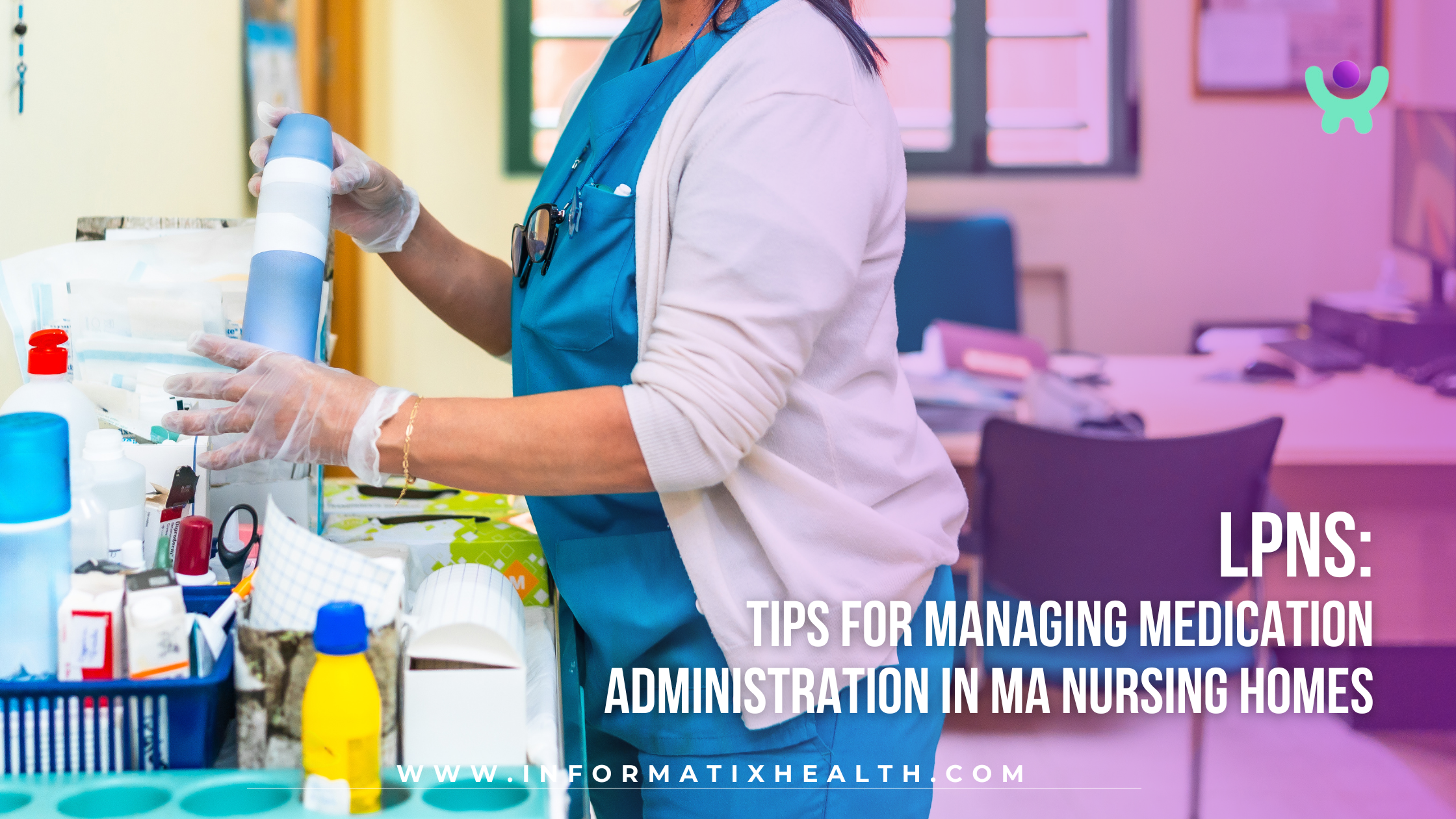
Medication administration is a critical responsibility for Licensed Practical Nurses (LPNs) in nursing homes. Ensuring accuracy, safety, and compliance is not only vital for patient health but also for maintaining professional standards and meeting Massachusetts regulations. At Informatix Health, we understand the unique challenges LPNs face in long-term care settings and are committed to supporting nurses with resources and opportunities for growth.
Understand Massachusetts Nursing Home Regulations
Massachusetts has specific rules for medication administration in nursing homes. LPNs must follow state guidelines regarding medication storage, documentation, and administration schedules. Staying updated on these regulations helps prevent errors and ensures compliance with the Massachusetts Board of Registration in Nursing.
Tip: Regularly review updates to Massachusetts nursing regulations and facility policies to stay compliant and confident in your practice.
Prioritize Accuracy with the “Five Rights”
To minimize medication errors, LPNs should consistently apply the “Five Rights” of medication administration:
- Right Patient – Confirm the resident’s identity using two identifiers, such as name and date of birth.
- Right Medication – Double-check the medication label and verify it matches the prescription.
- Right Dose – Measure accurately and adhere to prescribed dosages.
- Right Route – Administer medication via the correct route (oral, IV, topical, etc.).
- Right Time – Ensure medications are given at the scheduled times, avoiding missed or early doses.
Incorporating these steps into your routine promotes resident safety and professional accountability.
Implement Effective Documentation Practices
Accurate documentation is as important as the administration itself. LPNs should record every medication administered immediately, noting any missed doses or adverse reactions. Massachusetts nursing homes often use electronic health records (EHRs), which streamline documentation but still require vigilance to prevent errors.
Tip: Double-check entries before submitting and communicate any discrepancies with your team promptly.
Stay Alert to Potential Drug Interactions
LPNs play a key role in monitoring residents for adverse effects or drug interactions. In nursing homes, residents often take multiple medications, increasing the risk of complications. Collaborate closely with RNs, pharmacists, and physicians to ensure safe medication management.
Tip: Keep an updated medication list for each resident and review it regularly for potential interactions.
Manage Time and Workload Efficiently
Busy nursing home environments can make medication administration stressful. LPNs should develop a structured workflow, prioritize tasks, and avoid rushing, which can lead to mistakes.
Tip: Use checklists or digital reminders to stay organized and reduce the risk of missed medications.
Continuous Learning and Professional Development
Ongoing education is essential for LPNs. Massachusetts nursing homes encourage continuous learning through workshops, in-service training, and certification programs. Staying current with best practices in medication administration improves patient care and enhances professional growth.
Join Informatix Health and Grow Your Nursing Career
At Informatix Health, we support LPNs in Massachusetts nursing homes with rewarding opportunities, flexible schedules, and professional growth resources. If you’re an LPN ready to make a difference in long-term care and advance your career, we invite you to apply with Informatix Health today and become part of a team that values your expertise and dedication.