

For many veterans, home represents far more than a familiar place. It is where family gathers, routines feel comfortable, memories live, and independence can be maintained. When mobility begins to change, staying at home may require additional support—but it does not have to mean giving up the comfort, dignity, or choices that make home meaningful.
For veterans who need assistance getting around or completing everyday activities, in-home care for veterans can provide an important balance between independence and dependable support. With thoughtful planning, family involvement, and compassionate veteran home care, older and disabled veterans can continue enjoying familiar surroundings while receiving assistance tailored to their individual needs.
At Informatix Health, we believe veterans deserve care delivered with gratitude, patience, and respect for the lives they have built.
Supporting Mobility Without Taking Away Independence
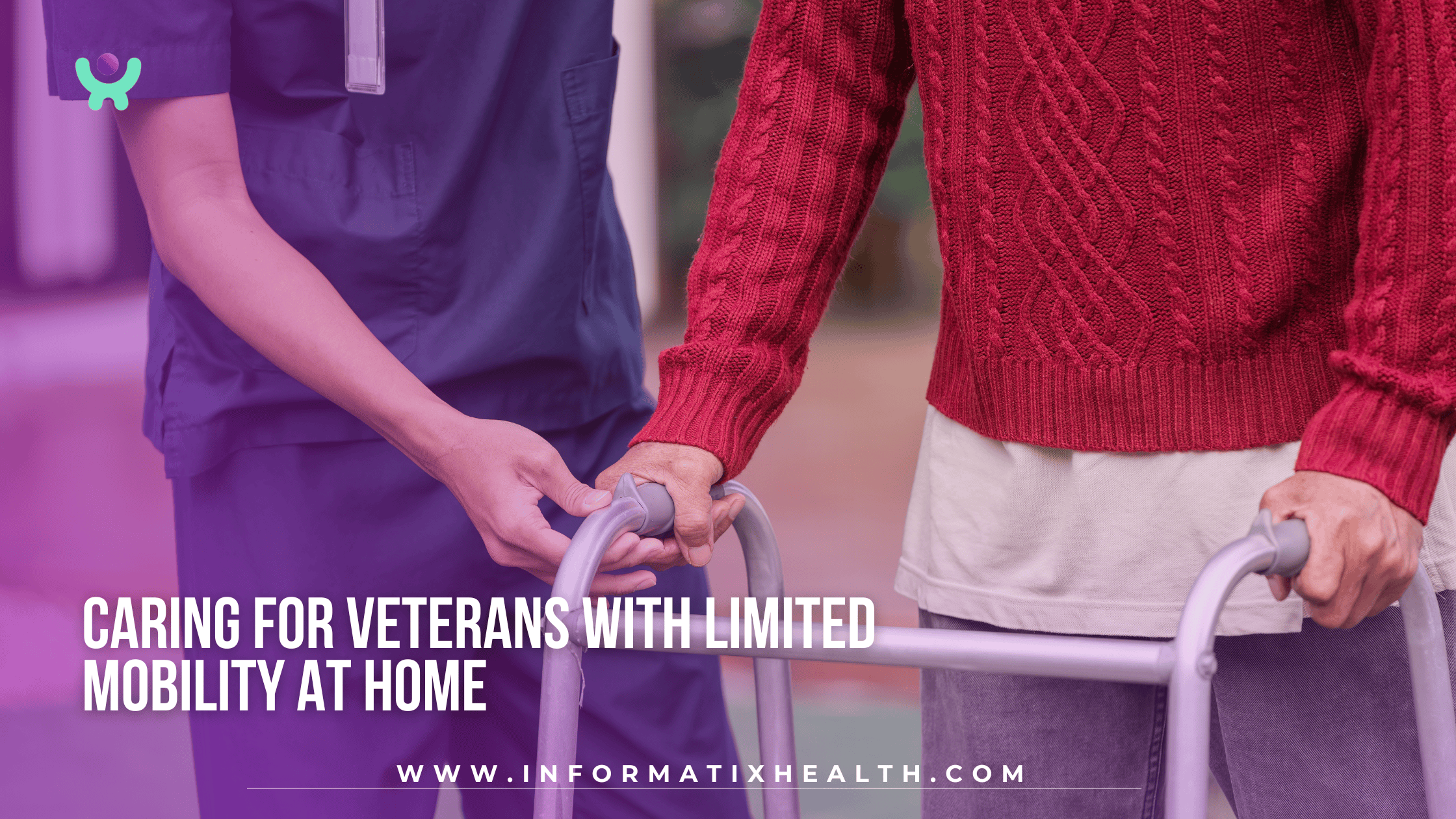
Limited mobility looks different for every veteran. Some may walk independently but have difficulty with stairs or standing for long periods. Others may use a cane, walker, or wheelchair or need more consistent help moving safely throughout the home.
Whatever the circumstances, mobility assistance for veterans should focus on providing the right amount of support—not automatically taking over every task.
Independence can be deeply personal. When possible and appropriate, allowing veterans to continue participating in familiar routines can help them maintain a sense of control over their day. Personalized home care for veterans can provide assistance where it is needed while respecting the things an individual can and wants to continue doing independently.
The home environment itself also deserves attention. Clear pathways, good lighting, accessible everyday items, and thoughtful furniture placement can make movement easier. When more significant accessibility changes are needed, families may benefit from professional recommendations specific to their loved one’s abilities and home.
Making Everyday Life at Home More Comfortable
Mobility challenges can affect much more than walking. Getting dressed, preparing a meal, bathing, grooming, completing household routines, or moving between rooms may become more difficult.
This is where private home care for veterans can make everyday life more manageable.
Depending on an individual’s needs and care plan, caregivers may provide appropriate assistance with personal routines, meal preparation, mobility, companionship, and other activities of daily living. The goal of care for veterans at home is not simply to complete a series of tasks. It is to make those everyday moments easier while preserving privacy and dignity.
Personal care deserves particular sensitivity. A veteran who has spent decades taking care of themselves may find it difficult to accept help with dressing, grooming, or other private routines. Compassionate caregivers understand that how assistance is provided matters just as much as the assistance itself.
Personal care for veterans should always be approached respectfully, with attention to individual preferences and as much participation and choice as circumstances allow.
Familiar routines can also bring comfort. Morning coffee in a favorite chair, an afternoon television program, time spent outdoors, conversations with family, or calls with fellow veterans may seem like small parts of the day, but they can carry tremendous personal meaning.
Good home care services for veterans should support the life someone already values rather than make life revolve entirely around receiving care.
Companionship Matters, Too
Mobility limitations can sometimes make it harder to leave the house, participate in community activities, or visit friends. Over time, opportunities for regular social interaction may become less frequent.
That is why companion care for veterans can be an important part of support at home.
Companionship may be as simple as sharing a meal, having a conversation, enjoying music, looking through photographs, or spending time together during the day. For an older veteran living alone, a dependable and familiar caregiver can provide valuable human connection alongside practical assistance.
Family relationships remain equally important. Professional in-home caregivers for veterans can complement—not replace—the support of spouses, adult children, relatives, and friends. Additional assistance can help family members spend more of their time simply being family instead of trying to manage every caregiving responsibility themselves.
For a spouse or adult child providing significant daily assistance, respite care for veterans may also provide valuable time to manage work, appointments, household responsibilities, or personal needs.
Helping Veterans Continue Aging at Home
As a veteran’s needs change, care should be able to change with them.
Someone who initially needs occasional senior mobility assistance or companionship may eventually require more regular support with everyday activities. Paying attention to meaningful changes in mobility, routines, or comfort can help families determine when a care plan may need to be reviewed.
New or worsening mobility problems, falls, unusual weakness, pain, dizziness, or other concerning symptoms should be discussed with an appropriate healthcare professional.
Families may also want to explore veteran-specific resources that could be available to their loved one. Depending on eligibility, veterans may have access to certain healthcare, caregiver, or home- and community-based resources through the U.S. Department of Veterans Affairs. Eligibility and available services vary, so families should verify current veteran home care benefits directly with the VA or an appropriately accredited representative.
Private care can also be part of the family’s plan. For veterans who value remaining in familiar surroundings, aging in place for veterans can be supported through a combination of family involvement, an accessible home environment, professional guidance, and reliable in-home assistance.
The right solution will be different for every family.
What matters is creating a plan around the veteran—not forcing the veteran to fit into a predetermined plan.
Care That Honors the Person Behind the Service
Veterans have unique stories, experiences, preferences, and ways of living. Those individual qualities should remain at the center of their care.
Meaningful home care for senior veterans begins by asking what matters to the person receiving it. What routines do they want to preserve? Where would assistance make life easier? What can they still comfortably do themselves? What makes them feel most at home?
Sometimes support means a steady hand while moving through the house. Sometimes it means help preparing dinner. Other times, it means companionship and a familiar person to talk with.
These everyday acts are what make compassionate care for veterans personal.
At Informatix Health, we are grateful for the service and sacrifices veterans have made. When additional assistance becomes necessary, we believe that support should preserve dignity, encourage independence, and recognize the individual—not simply their limitations.
Helping Your Veteran Loved One Stay Comfortable at Home
If a veteran you love is experiencing limited mobility, you do not have to navigate changing care needs alone.
Informatix Health provides private care for veterans focused on personalized support, companionship, dignity, and independence at home. Whether your loved one could benefit from mobility assistance at home, support with everyday routines, companionship, or additional help alongside family caregivers, we are here to discuss a care approach built around their individual needs.
Contact Informatix Health today to learn more about our in-home veteran care services and how compassionate support can help a veteran you love continue living comfortably and confidently in the place they call home.