

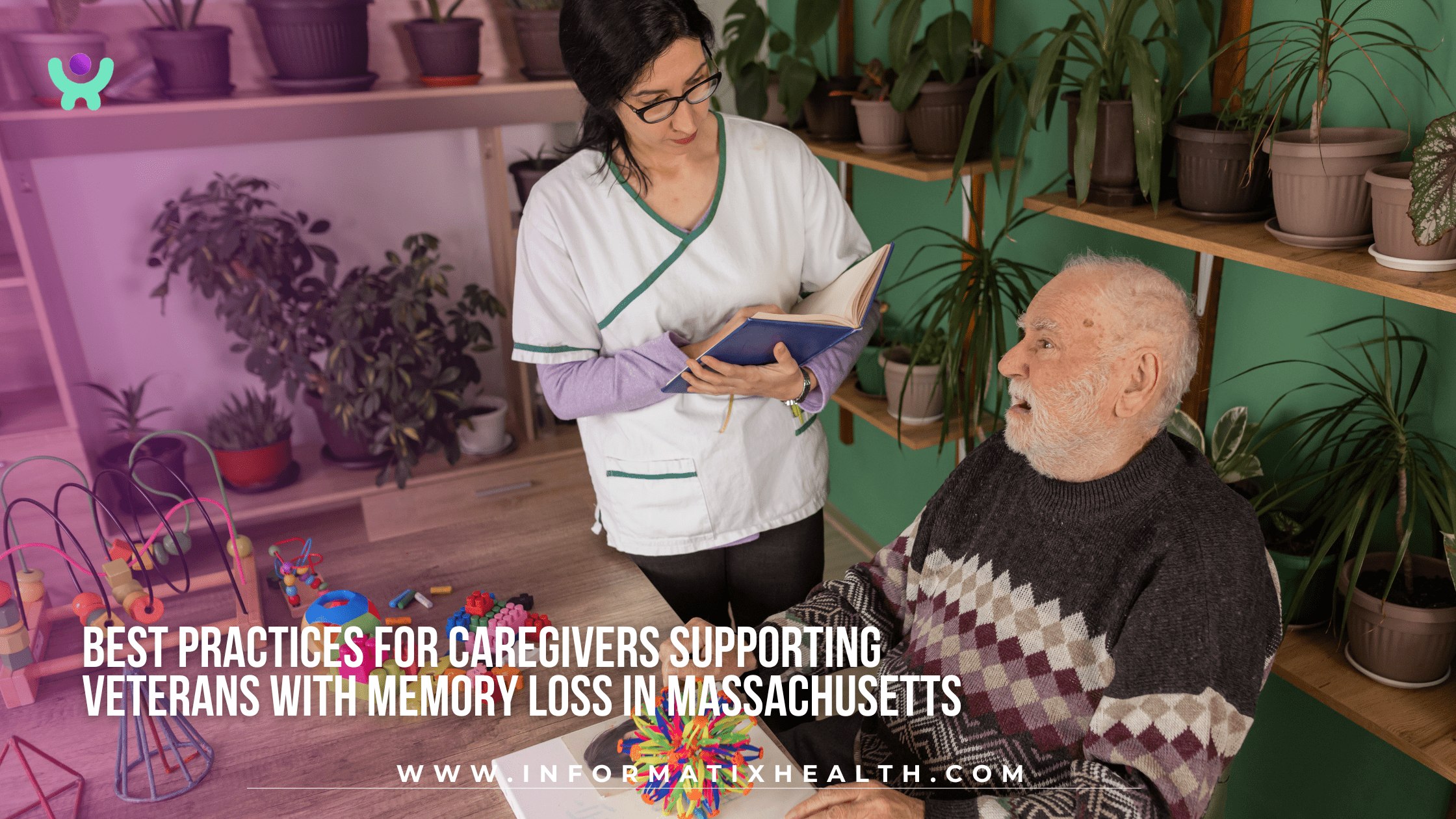
Caring for a veteran with memory loss is meaningful work that requires patience, compassion, and skill. Many veterans in Massachusetts are living with dementia, Alzheimer’s disease, or other cognitive challenges, and they rely on dedicated caregivers and Home Health Aides (HHAs) to help them live safely and comfortably at home.
At Informatix Health, we recognize the important role caregivers play in honoring veterans through quality care. Below are best practices to help caregivers provide effective, respectful, and person-centered support.
Understand the Veteran’s History and Routine
Veterans often find comfort in structure and familiarity. Learning about their military background, daily habits, and personal preferences can help build trust and reduce confusion. Simple routines around meals, medications, and rest can make daily life feel more predictable and calm.
Taking time to listen to their stories and experiences also helps strengthen your connection and shows respect for their service.
Communicate with Patience and Clarity
When supporting veterans with memory loss, clear and gentle communication is essential. Use simple words, maintain eye contact, and speak slowly. Avoid rushing conversations and allow extra time for responses.
If a veteran becomes confused or frustrated, remain calm and reassuring. Redirection and gentle reminders are often more effective than correction.
Create a Safe and Supportive Environment
Safety is a top priority when providing in-home care for veterans with cognitive challenges. Caregivers should regularly check for fall risks, ensure walkways are clear, and assist with mobility as needed.
Consistent supervision, especially during personal care and medication routines, helps reduce accidents and promotes independence in a safe way.
Support Daily Living with Dignity
Assisting with bathing, dressing, meal preparation, and medication reminders is a core part of caregiving. It is important to encourage independence whenever possible while offering support respectfully.
Preserving dignity and privacy helps veterans feel valued and in control, even when memory loss makes daily tasks more challenging.
Offer Companionship and Emotional Support
Caregiving is not only about physical assistance. Emotional support and companionship play a major role in the well-being of veterans with memory loss. Engaging in conversation, listening, or participating in simple activities can reduce loneliness and anxiety.
A consistent and caring presence can bring comfort and improve overall quality of life.
Work as Part of a Care Team
Effective care often involves collaboration with families, nurses, and care coordinators. Sharing observations and concerns helps ensure the veteran receives the best possible support.
At Informatix Health, caregivers are never alone. We value open communication and teamwork to help caregivers succeed in their roles.
Caring for Yourself as a Caregiver
Supporting veterans with memory loss can be emotionally demanding. Caregivers should prioritize self-care, ask for guidance when needed, and take advantage of available support and training.
Feeling supported and appreciated allows caregivers to continue providing compassionate, high-quality care.
Join a Team That Values Your Work
At Informatix Health, we are proud to support caregivers and HHAs who are passionate about caring for veterans in Massachusetts. We offer opportunities to grow, feel supported, and make a meaningful difference in the lives of those who served.
If you are a caregiver or HHA looking for rewarding work in private care for veterans, we invite you to apply to Informatix Health today. Join a team that values your skills, respects your dedication, and supports you every step of the way.