

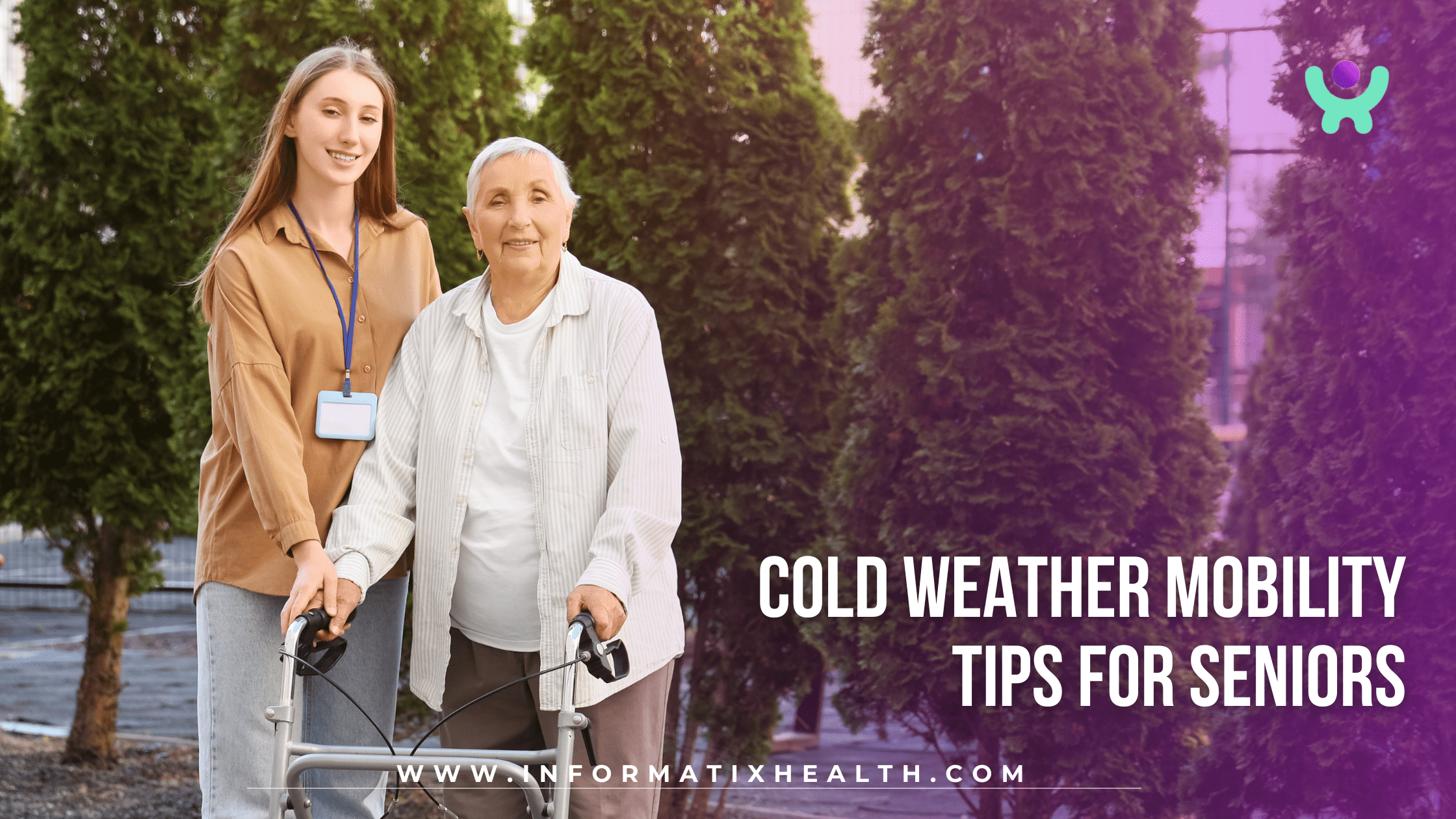
As temperatures drop, caregivers and HHAs play an essential role in keeping seniors safe, comfortable, and mobile. Winter brings unique challenges—icy walkways, stiff joints, colder homes, and shorter days can all make movement more difficult. At Informatix Health, we understand that caregivers are the heart of quality private care, and your support during this season can make all the difference.
Below are simple, effective mobility tips designed to help seniors stay active and secure all winter long.
1. Prioritize Warm-Up Movements Indoors
Cold weather can make joints feel stiff and slow. Before heading outside or beginning daily activities, encourage gentle warm-up exercises.
- Light stretching
- Slow arm circles
- Marching in place
These small movements help increase circulation, improve flexibility, and reduce the risk of slips due to stiffness.
2. Keep Walkways Clear and Well-Lit
Even a small patch of ice can be dangerous for older adults. Caregivers can help by:
- Checking outdoor walkways for snow or ice
- Using salt or sand for traction
- Ensuring porches, steps, and paths are well-lit
Better visibility and clear surfaces dramatically reduce fall risks.
3. Choose Proper Winter Footwear
Footwear matters more in the winter than any other season. Recommend shoes or boots with:
- Non-slip rubber soles
- Good ankle support
- Warm but lightweight materials
Avoid worn-out soles or smooth-bottom shoes, which increase slipping hazards.
4. Encourage Slow, Steady Pacing
Winter mobility is not about speed—it’s about stability. Remind seniors to:
- Take smaller steps
- Walk slowly
- Hold railings when possible
Caregivers can offer a steady arm or use gait belts when safe and appropriate.
5. Support Mobility Indoors Too
Cold months often mean more time inside. Keep seniors moving by incorporating light activity throughout the day:
- Short hallway walks
- Seated leg lifts
- Stretch breaks between TV shows or meals
These small efforts maintain strength and prevent deconditioning during long winter weeks.
6. Dress in Warm, Layered Clothing
Temperature changes between indoors and outdoors can affect movement and comfort. Encourage seniors to dress in layers that are:
- Easy to put on
- Not too bulky
- Warm enough for quick trips outside
Proper clothing keeps muscles warm and reduces joint stiffness.
7. Monitor for Signs of Fatigue or Discomfort
Cold weather can take a toll on older adults. Caregivers should watch for:
- Shivering
- Slow movement
- Unusual unsteadiness
- Complaints of pain or numbness
Adjust mobility plans when needed to ensure safety at all times.
Warm Care Makes a Big Difference
Caregivers and HHAs provide more than physical support—you offer comfort, encouragement, and companionship that helps seniors feel confident during the winter months. Your presence ensures they stay active while reducing the risk of cold-weather injuries.
Ready to Make a Difference This Winter?
If you’re a caregiver or HHA looking for meaningful work with a home health care agency that values compassion, reliability, and teamwork, Informatix Health is hiring.
Join an organization that supports you so you can support others.
Contact Informatix Health today to learn more and apply.