

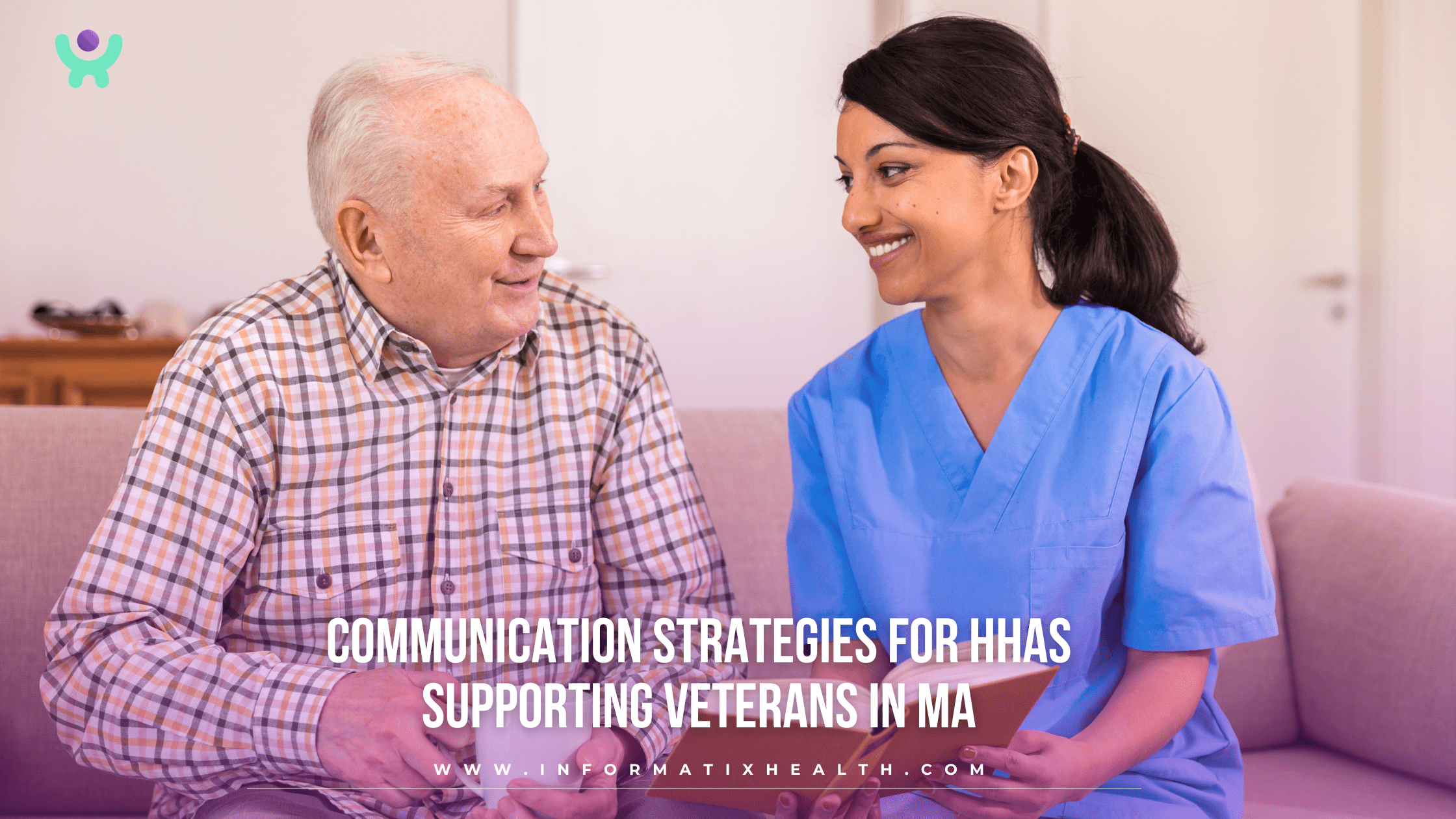
As a Home Health Aide (HHA), you play a vital role in helping veterans maintain their independence and quality of life at home. Veterans often have unique experiences and needs, and effective communication is key to building trust, providing compassionate care, and ensuring their safety and comfort.
At Informatix Health, we support HHAs in Massachusetts with practical strategies to connect meaningfully with the veterans they serve.
Understanding Veterans’ Communication Needs
Veterans may face physical, cognitive, or emotional challenges that influence how they communicate. HHAs should be aware of:
- Service-related experiences or trauma, such as PTSD
- Hearing or speech difficulties
- Mobility limitations that impact gestures or movement
- A desire for independence while still needing support
Recognizing these factors helps HHAs approach each interaction with patience, empathy, and respect.
Communication Tips for HHAs Supporting Veterans
- Listen Actively
Give veterans your full attention. Let them share their thoughts, stories, and concerns without interruption. - Use Clear and Simple Language
Speak slowly and use short, clear sentences. Repeat or rephrase instructions if needed to ensure understanding. - Pay Attention to Nonverbal Cues
Gestures, eye contact, and facial expressions can communicate care and reassurance. Written notes can help if a veteran has hearing difficulties. - Show Patience and Empathy
Veterans may take time to respond or may share memories of service. Approach every conversation with kindness and understanding. - Involve Veterans in Decisions
Encourage participation in their care plans. Asking for input promotes independence and strengthens trust. - Adapt to Individual Preferences
Each veteran is unique. Some may prefer formal conversation, while others respond better to humor or casual talk. Adjust your communication style to meet their comfort level.
Why Effective Communication Matters for HHAs
When HHAs communicate effectively, veterans feel respected, valued, and understood. This improves compliance with care routines, reduces anxiety, and strengthens the caregiver-patient relationship—making home care safer and more rewarding for everyone.
Join a Team that Supports HHAs
At Informatix Health, we provide HHAs with training, guidance, and support to care for veterans with confidence and compassion. Your skills make a real difference in the lives of veterans in Massachusetts.
Apply to Informatix Health today and become an HHA who supports veterans with care, respect, and expertise.