

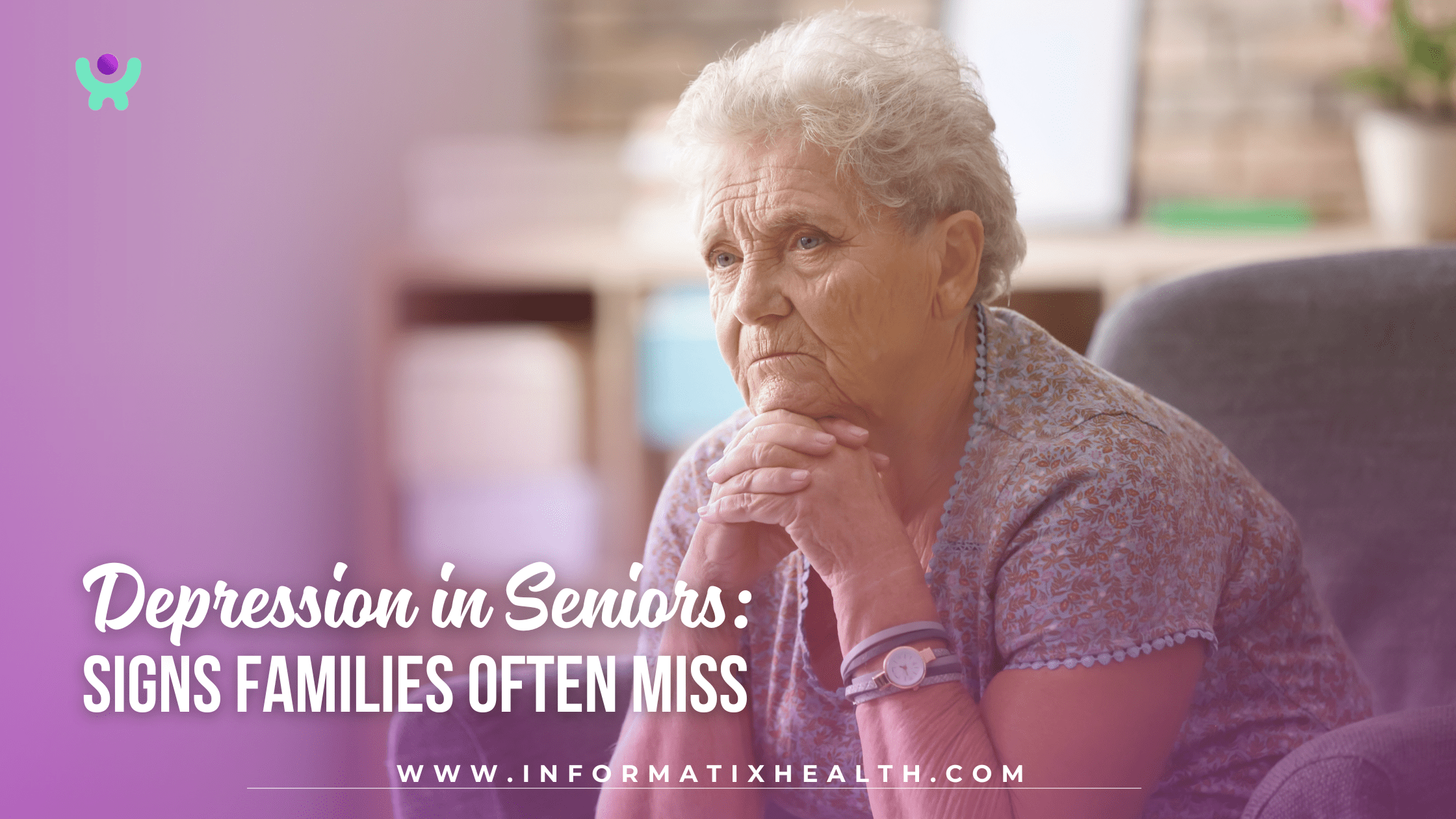
As our loved ones age, it’s natural to expect certain changes in their energy levels, routines, or social activities. However, persistent sadness, withdrawal, or changes in behavior should never be dismissed as “just getting older.” Depression is not a normal part of aging, yet it often goes unrecognized in older adults because its symptoms can look different than they do in younger people.
Recognizing the warning signs early can make a meaningful difference in a senior’s quality of life. With compassionate support, professional guidance, and the right care, many seniors can continue living fulfilling, independent lives at home.
At Informatix Health, we understand that emotional well-being is just as important as physical health. Our caregivers provide compassionate home care for seniors that supports both the daily needs and emotional wellness of older adults.
Understanding Depression in Older Adults
Depression is a medical condition that affects how a person thinks, feels, and functions. While occasional sadness is a normal part of life, depression is more persistent and can interfere with daily activities, relationships, and overall well-being.
Older adults may experience depression for many reasons, including chronic illness, the loss of a spouse or close friends, reduced mobility, social isolation, or major life changes such as retirement.
Because symptoms can sometimes resemble other health conditions or age-related changes, depression is often overlooked in seniors.
Signs Families May Miss
Depression doesn’t always appear as obvious sadness. In many older adults, symptoms may be subtle or develop gradually.
Some signs families should watch for include:
- Loss of interest in hobbies or favorite activities
- Withdrawing from family and friends
- Changes in sleep patterns
- Poor appetite or unexpected weight changes
- Fatigue or low energy
- Increased irritability
- Difficulty concentrating
- Neglecting personal hygiene
- Expressing feelings of hopelessness or worthlessness
If these symptoms persist or interfere with daily life, it’s important to encourage evaluation by a qualified healthcare provider. Early diagnosis and treatment can often improve quality of life.
Why Depression Often Goes Unnoticed
Many seniors hesitate to talk about their emotional health. Some may believe they should simply “deal with it,” while others worry about becoming a burden to their families.
In some cases, physical symptoms such as aches, fatigue, or memory concerns may become more noticeable than emotional symptoms.
Family members may also assume behavioral changes are simply part of normal aging, delaying conversations about mental health.
Understanding that depression is treatable can encourage families to seek appropriate medical guidance sooner.
The Impact of Social Isolation
Loneliness and isolation are significant risk factors for depression among older adults. Seniors who live alone or have limited opportunities for social interaction may be especially vulnerable.
Regular companionship can make a meaningful difference.
Professional companion care services provide friendly conversation, emotional support, and opportunities for social engagement that help reduce feelings of isolation while encouraging meaningful daily interaction.
Although companionship is not a treatment for depression, maintaining social connections can play an important role in overall emotional well-being.
Supporting Daily Routines
Depression can make everyday responsibilities feel overwhelming. Seniors may struggle to prepare meals, complete household chores, attend appointments, or maintain personal hygiene.
Compassionate in-home senior care can help seniors maintain healthy routines while preserving dignity and independence.
Support may include:
- Meal preparation
- Light housekeeping
- Medication reminders
- Transportation assistance
- Personal care assistance
- Daily companionship
These services help reduce stress while allowing seniors to remain safely in the comfort of home.
Encouraging Independence With Compassion
Maintaining independence is important for emotional well-being. Rather than taking over daily responsibilities, professional caregivers for seniors focus on providing the right amount of assistance while encouraging seniors to remain active and involved in their own care.
This personalized approach helps build confidence while supporting overall wellness.
Through private home care, seniors receive individualized assistance based on their unique needs, preferences, and lifestyle.
Supporting Families Through Difficult Conversations
Recognizing signs of depression in a loved one can be emotional for families. Many are unsure how to begin the conversation or worry about saying the wrong thing.
Approaching the discussion with patience, empathy, and genuine concern can help seniors feel heard rather than judged.
Families should also encourage their loved one to speak with their primary care provider or a qualified mental health professional if symptoms of depression are present. Professional evaluation is an important step toward identifying appropriate treatment and support.
The Role of Home Care in Emotional Well-Being
While home health care agencies do not diagnose or treat depression, compassionate caregivers can provide valuable support by helping seniors maintain routines, stay socially connected, and remain engaged in daily life.
Professional senior care services can also reduce stress for family caregivers while providing an extra layer of observation. Caregivers may notice changes in behavior or mood and communicate concerns to families, helping facilitate timely medical evaluation when appropriate.
This collaborative approach supports both physical and emotional well-being.
Why Families Trust Informatix Health
At Informatix Health, we believe exceptional care goes beyond assisting with daily tasks. We believe every senior deserves kindness, companionship, respect, and the opportunity to enjoy life with dignity.
Our experienced caregivers provide compassionate personalized home care, helping seniors remain safe, comfortable, and connected while supporting families with dependable care they can trust.
Contact Informatix Health Today
If you’re concerned that your loved one may be struggling with daily activities, loneliness, or changes in emotional well-being, Informatix Health is here to help with compassionate, personalized home care.
Contact Informatix Health today to learn more about our customized home care services and discover how our experienced caregivers can help your loved one remain safe, comfortable, supported, and independent at home.