

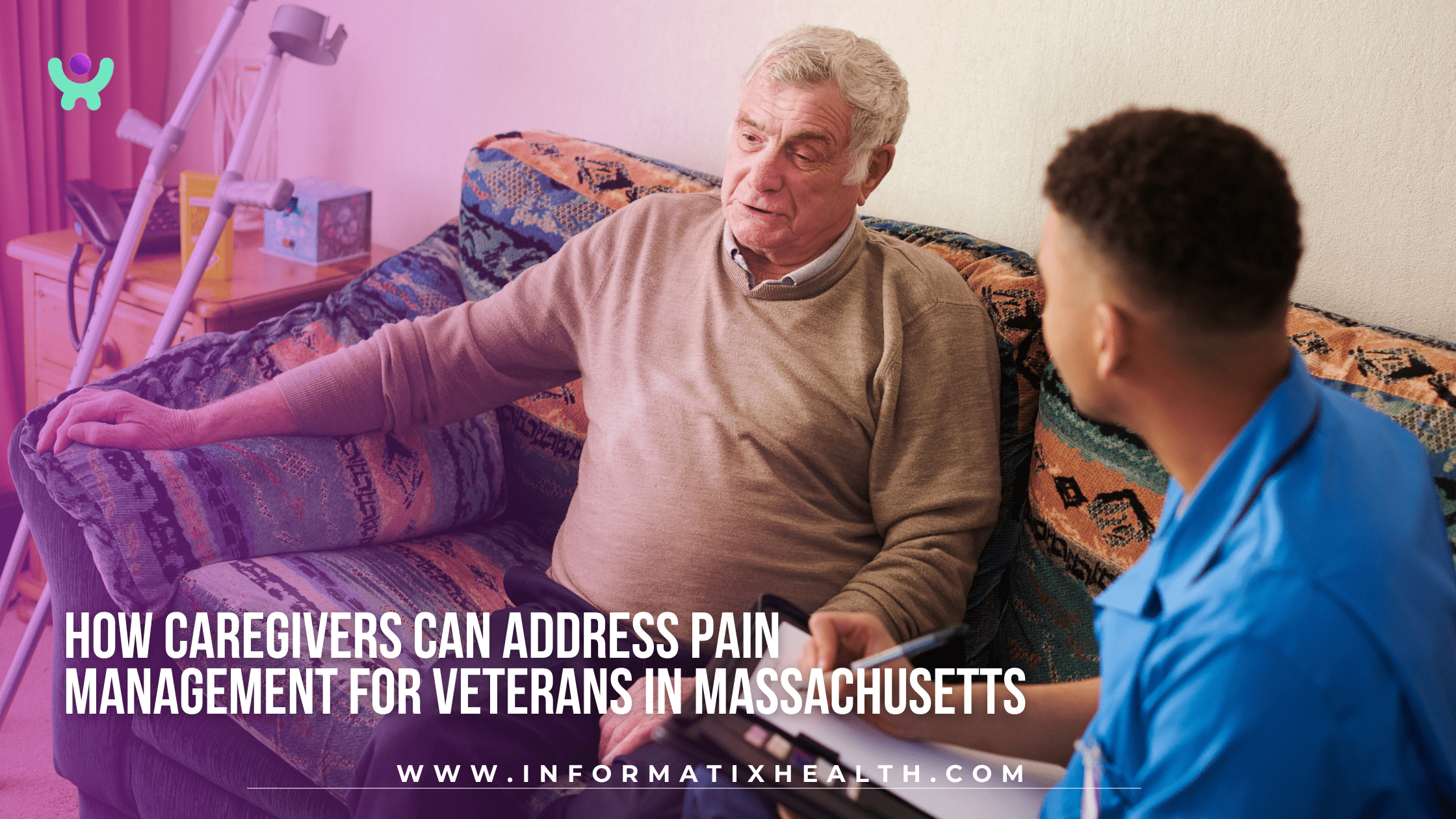
Providing care for veterans is both an honor and a responsibility. Many aging veterans face chronic pain due to injuries, service-related conditions, or age-related health issues. For caregivers in Massachusetts, understanding how to support veterans in managing pain is essential for improving their comfort, independence, and overall quality of life.
At Informatix Health, we value the dedication of caregivers and provide guidance and support to help you make a meaningful difference in the lives of the veterans you serve.
Understanding Pain in Veterans
Veterans may experience a variety of pain types, including:
- Musculoskeletal pain from past injuries or heavy physical activity during service.
- Arthritis or joint pain common in aging veterans.
- Neuropathic pain linked to nerve damage.
- Chronic pain conditions that affect daily functioning.
Pain can impact a veteran’s mobility, mood, and ability to complete daily tasks. Caregivers play a key role in recognizing signs of pain and supporting effective management strategies.
Strategies for Caregivers to Support Pain Management
1. Observe and Document Pain Symptoms
Caregivers should carefully observe veterans for signs of pain, such as grimacing, changes in posture, or decreased activity. Keeping a daily log of pain levels, triggers, and responses to interventions helps healthcare providers adjust treatment plans effectively.
2. Encourage Medication Adherence
Many veterans rely on prescribed pain medications or therapies. Caregivers can support adherence by ensuring medications are taken on schedule, monitoring side effects, and communicating with healthcare professionals about any concerns.
3. Support Physical Therapy and Gentle Movement
Assisting veterans with exercises recommended by physical therapists can reduce pain and improve mobility. Simple stretching, guided walking, or range-of-motion exercises can make a significant difference.
4. Promote Comfort Measures at Home
Caregivers can help create a safe and comfortable environment by:
- Adjusting furniture to reduce strain
- Providing supportive cushions or mattresses
- Offering heat or cold therapy as recommended
5. Address Emotional Wellbeing
Pain often affects mood and mental health. Listening, offering companionship, and encouraging relaxation techniques like deep breathing or meditation can help veterans cope emotionally with chronic pain.
Why Caregivers Matter
Caregivers are essential partners in a veteran’s health journey. Your compassion, attentiveness, and professionalism help veterans maintain independence and improve their quality of life. At Informatix Health, we provide the training and support needed for caregivers to confidently handle pain management and other health challenges in a home care setting.
Conclusion
Pain management for veterans requires a combination of observation, medical support, and compassionate care. Caregivers who understand these strategies can make a real difference in the daily lives of veterans in Massachusetts.
Join the Informatix Health team today to provide meaningful care for veterans and seniors in your community. Together, we can make recovery and comfort a priority for those who served our country.