

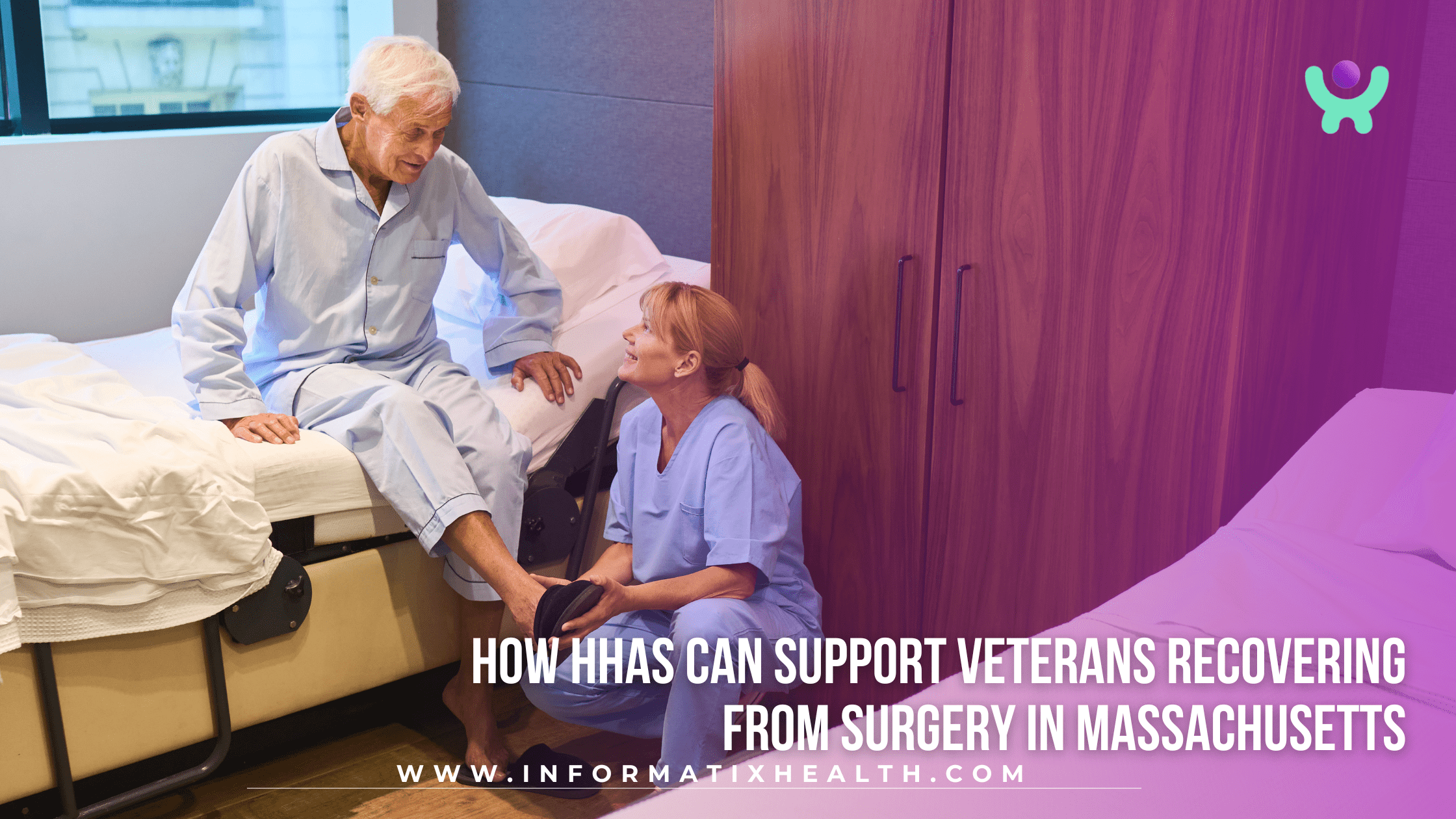
Veterans have given so much in service to our country. When they return home after surgery, many need extra support to heal safely, comfortably, and with dignity. As a Home Health Aide (HHA), your role in a veteran’s recovery is incredibly important. Your daily care, patience, and compassion can make a real difference in how smoothly their healing journey goes.
At Informatix Health, we value the meaningful work HHAs do—especially when caring for veterans who deserve respect, understanding, and personalized support.
Understanding the Unique Needs of Veterans
Veterans recovering from surgery may face challenges beyond physical healing. Some may live with chronic pain, limited mobility, or emotional stress related to their past experiences. Others may simply feel more comfortable with routines, structure, and clear communication.
As an HHA, taking time to listen, observe, and understand each veteran’s preferences helps build trust and creates a safer, more supportive recovery environment.
Providing Safe and Comfortable Post-Surgical Care
One of your most important responsibilities is helping veterans recover safely at home. This may include:
- Assisting with mobility and transfers to prevent falls
- Supporting personal care needs such as bathing, dressing, and grooming
- Keeping the recovery area clean, organized, and hazard-free
- Encouraging rest while helping maintain light daily routines
Your presence helps reduce complications and allows veterans to heal in the comfort of their own homes.
Supporting Medication and Recovery Routines
While HHAs do not administer medications, you play a key role in supporting medication routines by:
- Offering reminders according to the care plan
- Observing for side effects or changes in condition
- Reporting concerns promptly to the care team or family
Consistency and attention to detail can help prevent setbacks and support a smoother recovery.
Offering Emotional Support and Companionship
Recovery can feel isolating—especially for veterans living alone. Simple acts such as conversation, shared meals, or listening to their stories can greatly improve emotional well-being. Many veterans appreciate being heard and respected for their life experiences.
Your kindness and companionship can boost morale, reduce stress, and encourage a more positive healing outlook.
Communicating Changes and Advocating for Care
HHAs are often the first to notice changes in a veteran’s condition. Reporting signs of pain, infection, confusion, or emotional distress helps ensure timely medical attention. Clear communication with supervisors and care coordinators is essential to keeping veterans safe and supported.
Finding Purpose in Veteran Home Care
Caring for veterans recovering from surgery is more than a job—it’s an opportunity to give back. Your work honors their service while allowing you to grow professionally and personally. Many HHAs find this type of care deeply fulfilling.
Join the Informatix Health Team
If you’re an HHA who values compassionate, meaningful work, Informatix Health would love to hear from you. We support our caregivers with opportunities to make a difference, flexible assignments, and a team that truly appreciates your dedication.
Apply today and become part of a home care team that supports you as you support others.