

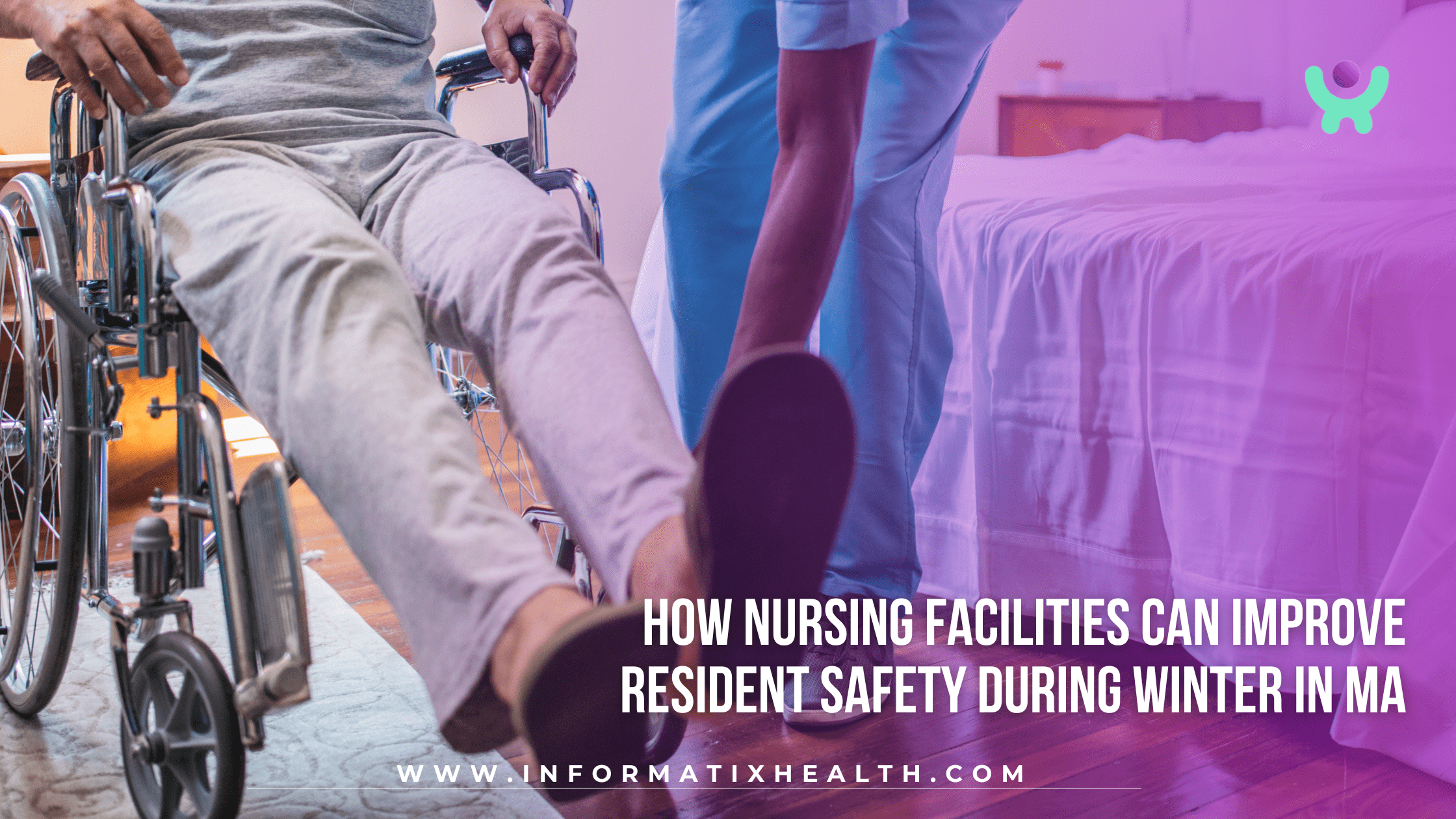
Winter in Massachusetts brings colder temperatures, icy sidewalks, and shorter daylight hours, all of which can create safety challenges for nursing home residents. Protecting residents from falls, illness, and seasonal hazards is a top priority for nursing facility staff. Here are practical strategies to improve resident safety during the winter months.
1. Prevent Falls with Winter Safety Measures
- Keep walkways, entrances, and parking areas clear of ice and snow.
- Use non-slip mats, handrails, and proper lighting in hallways and common areas.
- Ensure residents have appropriate footwear and assistive devices when walking outdoors.
2. Monitor Residents’ Health Closely
- Cold weather can worsen chronic conditions such as arthritis, respiratory issues, and heart disease.
- Conduct regular vital sign checks and watch for signs of hypothermia or frostbite.
- Adjust activity levels and schedules to reduce exposure to extreme cold.
3. Maintain Safe Indoor Environments
- Keep indoor temperatures consistent and comfortable for residents.
- Ensure heating systems are working efficiently and that rooms are free of drafts.
- Prevent slips inside the facility by cleaning wet floors promptly and using warning signs when necessary.
4. Encourage Proper Hydration and Nutrition
- Residents may drink less water in cold weather, increasing the risk of dehydration.
- Offer warm beverages and nutrient-rich meals to support immune health.
- Monitor residents for changes in appetite or weight that could signal health issues.
5. Train Staff on Winter Emergency Protocols
- Educate staff on how to respond to weather-related emergencies, such as power outages or snowstorms.
- Review evacuation plans and ensure that essential medical equipment is accessible.
- Encourage team communication and regular check-ins during severe weather events.
6. Support Resident Mobility and Engagement
- Provide indoor exercise or activity programs to maintain mobility when outdoor walking is limited.
- Use physical therapy or safe walking routines to prevent stiffness and falls.
Conclusion
Winter safety in Massachusetts nursing homes requires careful planning and attention to detail. By preventing falls, monitoring health, maintaining safe indoor environments, supporting nutrition, training staff, and keeping residents active, facilities can protect residents and provide peace of mind for families.
For nursing professionals looking to support safe and high-quality care, Informatix Health connects skilled RNs, LPNs, and CNAs with nursing facilities across Massachusetts. Contact us and help ensure resident safety this winter and beyond.