

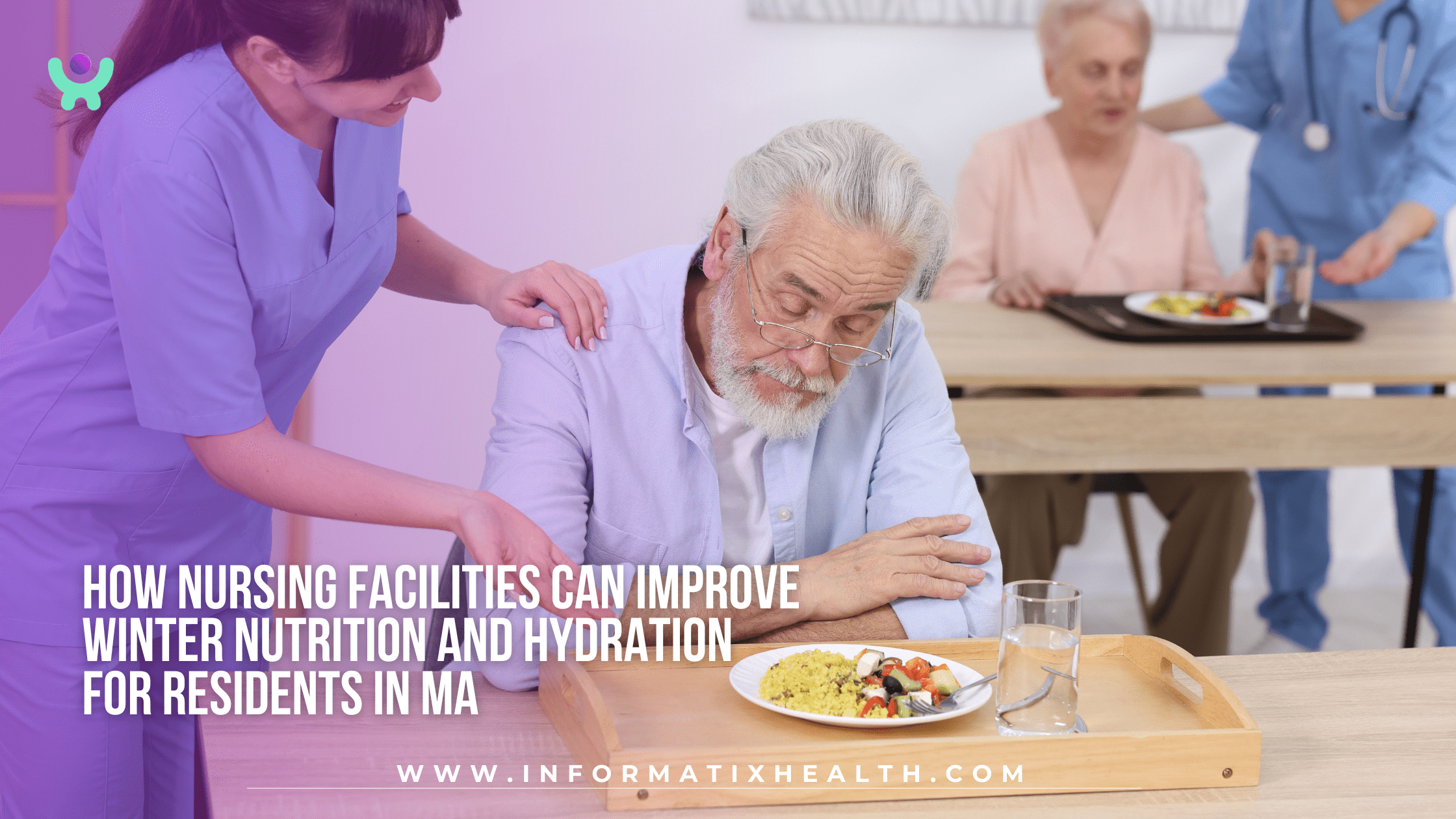
Winter in Massachusetts can be challenging for nursing home residents. Cold weather, seasonal illnesses, and reduced physical activity can make proper nutrition and hydration even more critical. For nursing facilities, ensuring residents maintain a balanced diet and adequate fluid intake during the winter months is essential for their health, safety, and overall well-being.
1. Prioritize Warm, Nutrient-Dense Meals
During colder months, residents may have decreased appetites. Nursing facilities can encourage adequate nutrition by:
- Offering warm, comforting meals that are rich in nutrients.
- Including seasonal vegetables and fruits that boost immune function.
- Rotating protein sources such as lean meats, fish, eggs, and plant-based options to maintain variety and appeal.
A well-balanced, nutrient-dense diet supports energy, immunity, and recovery from illness.
2. Encourage Hydration Throughout the Day
Dehydration is a common winter risk, as residents may not feel as thirsty in cold weather. Facilities can help by:
- Offering warm beverages like herbal teas or low-sodium broths.
- Scheduling regular hydration reminders for residents, especially those with cognitive impairments.
- Monitoring fluid intake and documenting consumption to prevent dehydration-related complications.
Proper hydration supports kidney function, digestion, and overall wellness.
3. Adapt Meals for Individual Needs
Many nursing home residents have dietary restrictions or medical conditions that require customized nutrition. Facilities can enhance care by:
- Working with dietitians to create personalized meal plans.
- Adjusting textures for residents with swallowing difficulties.
- Ensuring meals meet caloric and nutrient needs without compromising safety.
Individualized nutrition helps maintain residents’ health and quality of life.
4. Foster Social Mealtime Environments
Winter can bring isolation and low mood, which may affect residents’ eating habits. Nursing facilities can improve intake by:
- Encouraging communal meals where possible, following safety protocols.
- Creating a pleasant dining atmosphere with seasonal decorations and soft music.
- Engaging residents in meal preparation discussions or menu planning.
Social interaction during meals can boost appetite and enhance mental well-being.
5. Train Staff on Winter Nutrition and Hydration Awareness
Staff awareness is key to preventing winter-related nutrition and hydration issues. Facilities should:
- Provide training on signs of dehydration, malnutrition, and cold-related illness.
- Encourage staff to document dietary preferences and monitor residents’ intake.
- Promote collaboration between nursing, dietary, and care teams.
Educated staff can proactively address risks, improving overall resident care.
Partner with Informatix Health for Nursing Facility Support
Ensuring residents stay nourished and hydrated during Massachusetts winters requires skilled staffing and dedicated support. Informatix Health partners with nursing facilities to provide qualified RNs, LPNs, and CNAs who understand the importance of nutrition and hydration in resident care. Enhance your facility’s care quality and maintain resident well-being this winter. Contact Informatix Health today to discuss partnership opportunities and staffing solutions.