

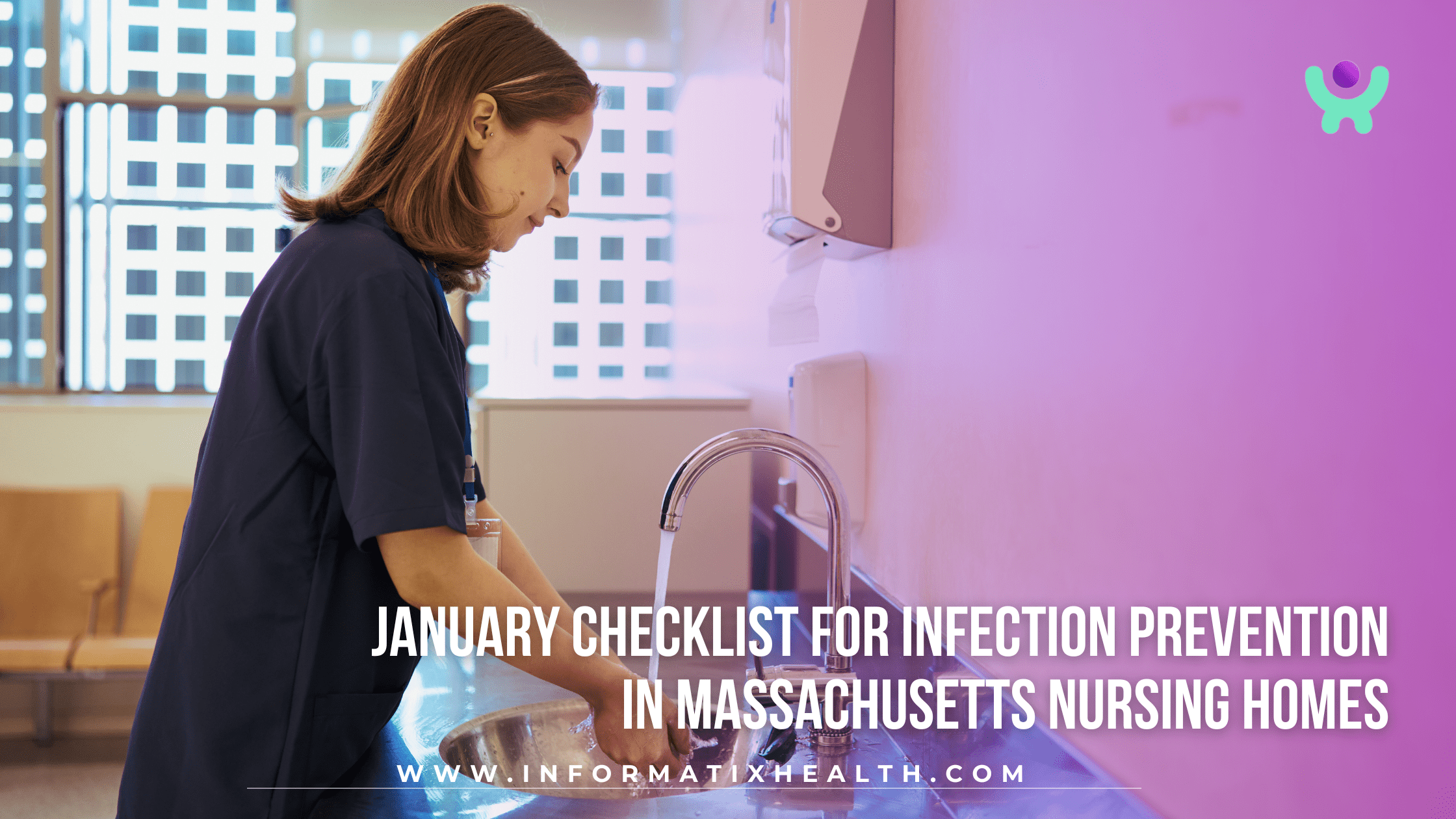
Infection prevention is a critical priority for nursing homes, especially during the winter months when respiratory illnesses and flu cases are more common. Busy nursing staff—including RNs, LPNs, and CNAs—play a key role in protecting residents and ensuring a safe care environment.
At Informatix Health, we understand the challenges faced by nursing home staff in Massachusetts and are committed to supporting high-quality care through education and staffing solutions. This January, use the following checklist to strengthen infection prevention practices in your facility.
1. Review and Reinforce Hand Hygiene
Proper hand hygiene is the first line of defense against infections.
- Ensure all staff follow handwashing protocols before and after resident contact.
- Provide hand sanitizer stations in common areas.
- Conduct brief refresher training sessions on proper handwashing techniques.
Consistent hand hygiene reduces the spread of germs and protects both residents and staff.
2. Update Vaccinations and Health Screenings
Preventing outbreaks starts with proactive health measures:
- Confirm that all staff are up to date on influenza and COVID-19 vaccines.
- Encourage vaccinations for residents if not already administered.
- Maintain accurate vaccination records and monitor compliance.
Healthy staff and residents are the cornerstone of a safe nursing home environment.
3. Maintain a Clean and Sanitized Environment
Environmental cleaning is essential to infection control. Nursing staff should:
- Follow established protocols for disinfecting high-touch surfaces.
- Check that shared equipment, like blood pressure cuffs and wheelchairs, are properly sanitized.
- Schedule regular deep cleaning for resident rooms, common areas, and restrooms.
A clean environment significantly reduces the risk of infections spreading.
4. Monitor Residents for Early Signs of Infection
Early detection is critical in preventing outbreaks.
- Observe residents for symptoms such as fever, cough, fatigue, or unusual behavior.
- Document any changes promptly and report to the nursing supervisor.
- Implement isolation protocols if infection is suspected to protect other residents.
Timely intervention can prevent infections from affecting the entire facility.
5. Educate Staff and Promote Awareness
Knowledge is key to effective infection prevention.
- Host short in-service trainings on current infection control guidelines.
- Share updates from the CDC or Massachusetts Department of Public Health.
- Encourage a culture of safety and accountability among all staff members.
Ongoing education helps staff stay prepared and confident in preventing infections.
Infection prevention requires diligence, teamwork, and consistent application of best practices. By following this January checklist, nursing home staff in Massachusetts can protect residents, colleagues, and themselves from preventable illnesses.
If you’re a dedicated nurse, RN, LPN, or CNA looking for rewarding opportunities in Massachusetts nursing homes, join Informatix Health today and make a difference in the lives of seniors.