

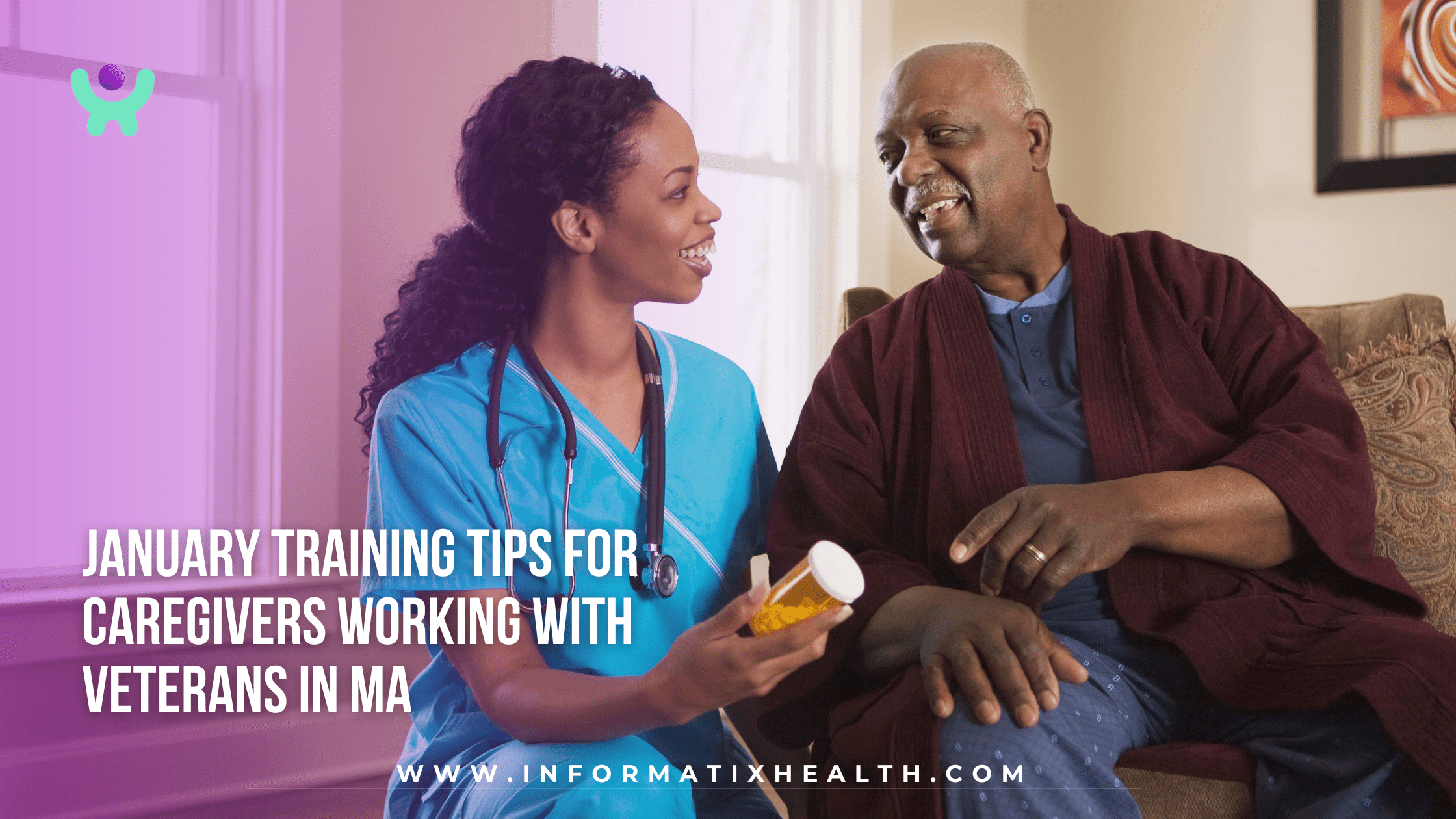
Caring for veterans is both an honor and a responsibility. As a private caregiver in Massachusetts, your role in supporting veterans’ daily needs, health, and independence is vital. January is a great time to refresh your skills, review safety practices, and focus on training that helps you provide compassionate, high-quality care.
1. Refresh Veteran-Specific Care Knowledge
Every veteran has unique needs. Some may live with chronic conditions like diabetes, heart disease, or mobility challenges, while others may require extra emotional support. Take time this month to review care plans, medication schedules, and any special instructions from healthcare providers. Staying informed ensures your care is safe, personalized, and effective.
Tip: Keep a notebook or digital log of each veteran’s preferences, routines, and health updates. This helps you notice small changes and respond quickly.
2. Focus on Winter Safety
Massachusetts winters can be harsh, and older adults are especially at risk during cold months. Training on winter safety is essential for caregivers working with veterans. Key areas to focus on include:
- Preventing slips and falls on icy surfaces
- Monitoring for signs of hypothermia or frostbite
- Ensuring the home is warm and comfortable
- Assisting with proper layering and winter footwear
By prioritizing safety, you help veterans stay healthy and comfortable all season.
3. Strengthen Communication and Emotional Support
Many veterans appreciate caregivers who listen, communicate clearly, and provide emotional support. Training in active listening, patience, and respectful communication helps build trust and improves daily interactions. Remember, small gestures—like asking about a veteran’s favorite memories or hobbies—can brighten their day and strengthen your caregiver-patient bond.
4. Review Emergency Preparedness
Emergencies can happen at any time, and knowing how to respond is crucial. January is a good time to review your emergency procedures, including:
- Knowing local emergency contacts and resources in MA
- Practicing safe evacuation plans
- Understanding how to respond to medical emergencies
Being prepared gives both you and the veterans you care for confidence and peace of mind.
5. Take Advantage of Available Training Resources
In Massachusetts, there are many resources to help caregivers improve their skills. Consider online courses, workshops, and in-person training programs designed for caregivers working with older adults and veterans. Continuous learning not only enhances your expertise but also benefits the veterans who rely on your care.
Providing high-quality, compassionate care to veterans is deeply rewarding. By taking the time to refresh your skills, prioritize safety, and strengthen communication, you can make a real difference in their lives this winter.
If you’re a dedicated caregiver in Massachusetts looking to make a meaningful impact, apply to join the team at Informatix Health today and help provide the compassionate care our veterans deserve.