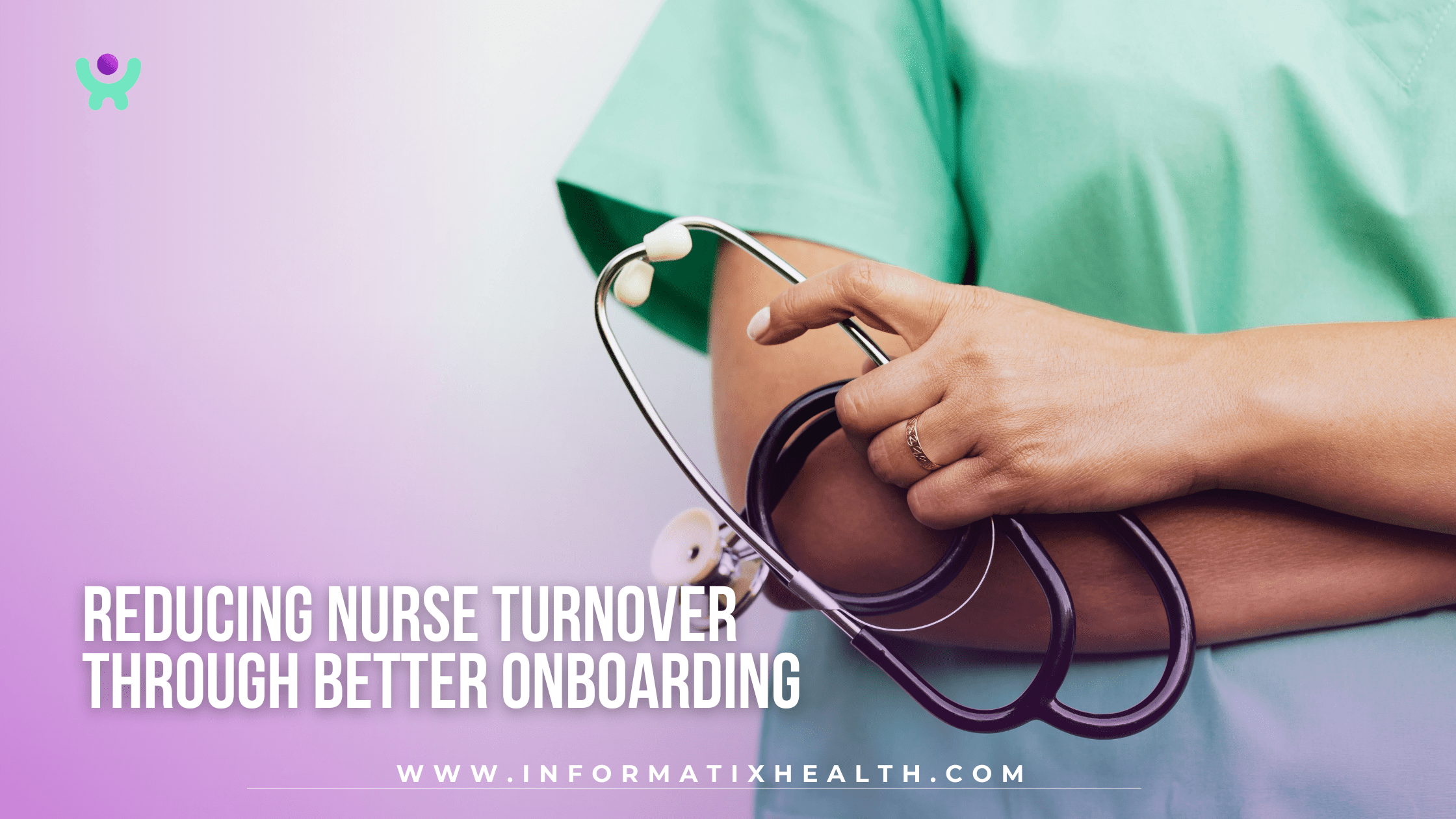
Nurse turnover is one of the most pressing challenges facing nursing homes, skilled nursing facilities, rehabilitation centers, and long-term care organizations. When nurses, CNAs, RNs, and LPNs leave shortly after being hired, facilities experience more than scheduling gaps. Turnover can affect resident care, staff morale, compliance readiness, operational costs, and overall workforce stability.
A strong onboarding process is one of the most effective ways to improve retention and build a more confident, engaged healthcare team. For nursing home facilities, better onboarding can help new staff feel prepared, supported, and connected from the very beginning.
At Informatix Health, we understand how important dependable staffing is to quality care. As a trusted nursing staffing agency, we help healthcare facilities strengthen workforce continuity through reliable staffing support and professional healthcare partnerships.
Why Nurse Turnover Is a Facility-Wide Concern
High turnover creates ongoing challenges for facility leadership, clinical teams, and residents. When positions remain unfilled or new hires leave quickly, existing staff often carry heavier workloads, leading to increased stress and burnout.
For nursing homes and long-term care facilities, turnover may contribute to:
- Inconsistent resident care
- Increased overtime costs
- Staff fatigue and burnout
- Lower employee morale
- Training disruptions
- Compliance concerns
- Reduced continuity of care
Reducing turnover requires more than filling open shifts. It requires a long-term approach to healthcare workforce solutions that supports staff from their first day forward.
The Role of Onboarding in Nurse Retention
Onboarding is more than orientation paperwork. A successful onboarding program introduces new employees to facility expectations, clinical workflows, resident care standards, documentation requirements, communication practices, and workplace culture.
For registered nurses (RNs), licensed practical nurses (LPNs), and certified nursing assistants (CNAs), effective onboarding helps reduce uncertainty and build confidence in a new environment.
When new staff feel supported early, they are more likely to remain engaged, perform effectively, and stay with the organization longer.
Start Before the First Shift
Strong onboarding begins before a nurse or CNA steps onto the floor. Clear communication before the first shift helps set expectations and reduce confusion.
Facilities should provide new hires with information about:
- Scheduling expectations
- Dress code and badge requirements
- Parking and building access
- Documentation systems
- Unit assignments
- Facility policies
- Key points of contact
This proactive communication helps new team members arrive prepared and confident. It also reflects a professional culture that values organization and support.
Provide Clear Role Expectations
One common reason for early turnover is a mismatch between expectations and reality. New nurses and nursing assistants need a clear understanding of their responsibilities, reporting structure, resident population, and performance expectations.
Facilities should clearly define expectations for RN staffing, LPN staffing, and CNA staffing roles, including clinical responsibilities, documentation standards, communication procedures, and resident care priorities.
When expectations are clear, staff members are better equipped to succeed.
Pair New Staff With Experienced Mentors
Mentorship can make a significant difference in nurse retention. New employees often benefit from having an experienced team member available to answer questions, model best practices, and provide guidance during the transition period.
Mentorship supports:
- Faster adjustment to facility routines
- Better communication
- Increased confidence
- Reduced stress
- Stronger team relationships
A structured mentoring process can help new staff feel welcomed and supported rather than overwhelmed.
Make Training Practical and Facility-Specific
Generic onboarding is rarely enough for long-term care environments. Every facility has its own systems, resident needs, workflows, and care expectations.
Effective onboarding should include hands-on training related to:
- Resident care routines
- Electronic health record systems
- Infection control protocols
- Fall prevention procedures
- Medication administration processes
- Emergency response expectations
- Documentation requirements
Facility-specific training helps improve performance while supporting quality resident care and regulatory compliance.
Support Temporary and Agency Staff With Orientation
When facilities partner with a healthcare staffing agency, onboarding still matters. Temporary, per diem, and agency staff need enough facility-specific guidance to safely and effectively support care delivery.
A brief but structured orientation can help agency professionals understand important workflows, resident needs, documentation practices, and reporting expectations.
Partnering with an experienced nurse staffing agency can help facilities access qualified professionals while maintaining consistency in care standards.
Improve Communication During the First 30 Days
The first few weeks are critical for retention. New staff should have opportunities to ask questions, receive feedback, and discuss challenges before frustration builds.
Facility leaders can improve retention by scheduling check-ins during the first 7, 14, and 30 days. These conversations allow managers to identify concerns early and provide support where needed.
Ongoing communication helps employees feel valued and gives facilities an opportunity to address issues before they lead to turnover.
Reduce Burnout Through Staffing Support
Even the best onboarding program can struggle if a facility is chronically understaffed. New employees are less likely to stay when they enter an environment where existing staff are overwhelmed, shifts are consistently short, and expectations feel unrealistic.
A dependable medical staffing agency can help facilities reduce pressure on permanent teams by filling staffing gaps and supporting schedule stability.
Flexible healthcare staffing solutions help prevent burnout, improve morale, and create a healthier work environment for both new and existing staff.
Use Feedback to Strengthen Onboarding
Facilities should regularly evaluate their onboarding process by gathering feedback from new hires, supervisors, and clinical leadership.
Questions to ask may include:
- Did new staff feel prepared for their first shift?
- Were expectations clearly explained?
- Was training relevant and practical?
- Did they feel supported by leadership?
- What could have improved their transition?
Using feedback helps facilities build stronger onboarding systems that better support retention and workforce stability.
How Staffing Partnerships Support Retention
A strong healthcare staffing partner can help facilities manage workforce challenges while supporting long-term operational goals. Staffing agencies provide access to qualified healthcare professionals who can help reduce scheduling strain, improve coverage, and support continuity of care.
For nursing homes and long-term care facilities, clinical staffing solutions can help bridge gaps while leadership focuses on retention, training, and care quality.
By combining strong internal onboarding with reliable staffing support, facilities can create a more stable and resilient workforce.
Why Partner With Informatix Health
Informatix Health understands the staffing challenges nursing home facilities face every day. We provide dependable nursing staffing services designed to support facility operations, resident care, and workforce stability.
Whether your facility needs long-term care staffing, supplemental healthcare staffing, per diem coverage, or ongoing staffing support, our team is committed to connecting you with qualified professionals who understand the importance of compassionate, reliable care.
Partner With Informatix Health Today
Reducing nurse turnover starts with strong onboarding, supportive leadership, and reliable staffing solutions. Informatix Health is here to help nursing home facilities strengthen workforce stability, reduce staffing gaps, and support quality resident care.
Contact Informatix Health today to learn more about our healthcare staffing solutions and discover how partnering with our experienced team can help your facility improve retention, support compliance, and maintain dependable care coverage.