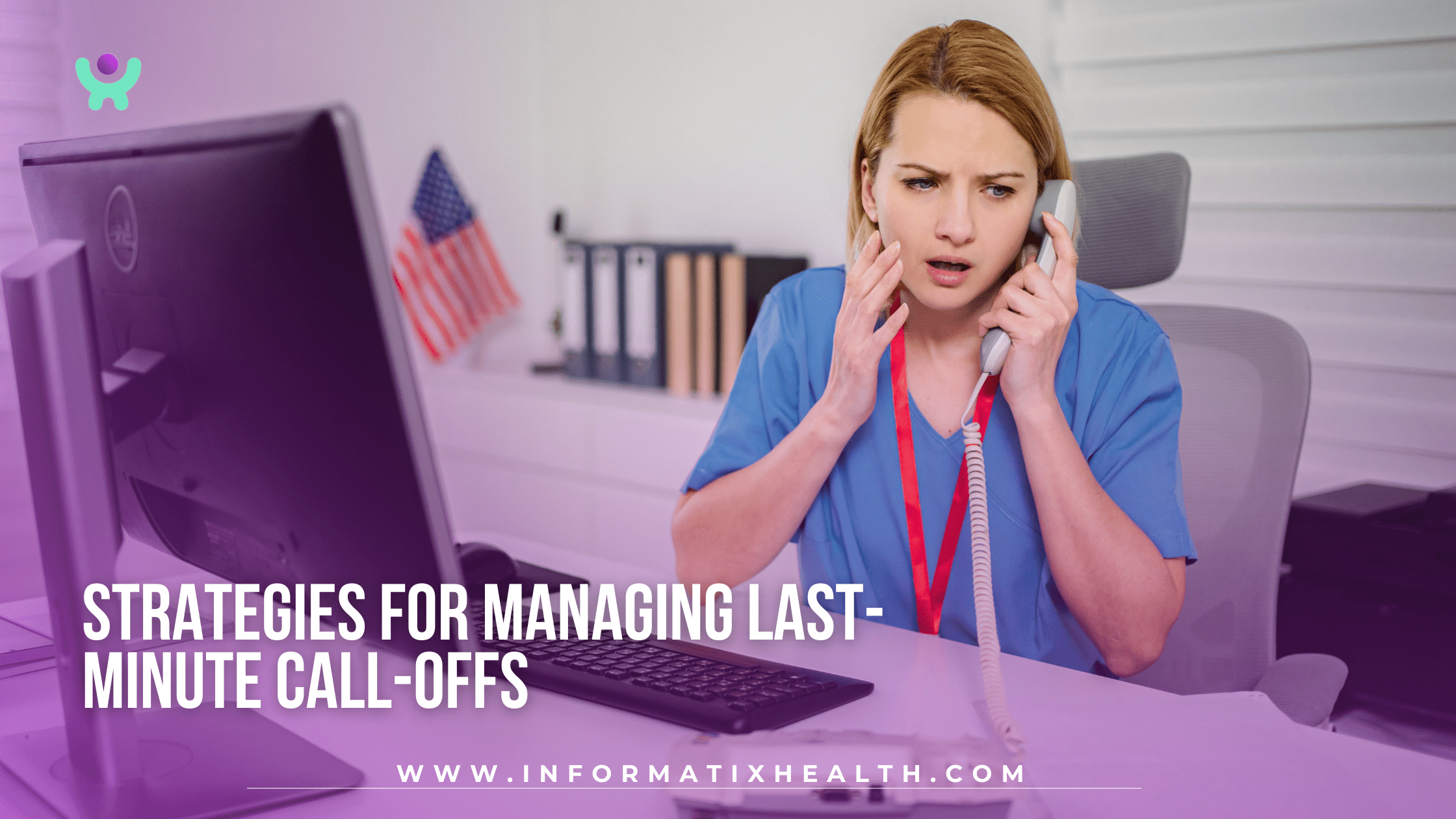
Few challenges are as disruptive to healthcare operations as unexpected employee absences. For nursing homes, skilled nursing facilities, rehabilitation centers, and long-term care organizations, last-minute call-offs can create immediate staffing shortages that impact resident care, employee morale, and regulatory compliance.
While no facility can completely eliminate unscheduled absences, having a proactive staffing strategy can significantly reduce disruptions and help maintain consistent quality care.
At Informatix Health, we understand the staffing challenges healthcare facilities face every day. As a trusted nursing staffing agency, we partner with nursing homes and healthcare organizations to provide reliable workforce solutions that help facilities stay fully staffed when they need support most.
The Impact of Last-Minute Call-Offs in Nursing Facilities
A single unexpected absence can create a ripple effect throughout an entire facility. When shifts become understaffed, remaining team members often face increased workloads, overtime demands, and higher stress levels.
Common consequences of staffing shortages include:
- Increased employee burnout
- Resident care disruptions
- Overtime expenses
- Compliance concerns
- Reduced staff satisfaction
- Higher turnover rates
- Increased risk of medication errors
- Lower quality of care outcomes
Effective healthcare staffing solutions can help facilities maintain continuity of care while minimizing operational challenges.
Develop a Comprehensive Staffing Contingency Plan
One of the most effective ways to manage call-offs is to prepare before they happen.
Every facility should maintain a written staffing contingency plan that outlines:
- Emergency staffing procedures
- Escalation protocols
- On-call staff availability
- Agency staffing contacts
- Shift coverage priorities
- Communication workflows
Having a structured plan allows leadership teams to respond quickly when unexpected absences occur.
Facilities that proactively invest in workforce management for healthcare often experience fewer disruptions and faster response times during staffing emergencies.
Build a Reliable Float Pool
Maintaining a dedicated float pool can provide valuable flexibility when staffing needs change unexpectedly.
A float pool may include:
- Registered Nurses (RNs)
- Licensed Practical Nurses (LPNs)
- Certified Nursing Assistants (CNAs)
- Medication aides
- Support personnel
These team members can help fill staffing gaps and provide coverage across multiple units or departments when call-offs occur.
Combining internal resources with support from a healthcare staffing agency creates additional workforce flexibility.
Partner With a Trusted Nursing Staffing Agency
One of the most effective strategies for managing staffing shortages is establishing a relationship with a dependable nursing staffing agency before emergencies arise.
When facilities experience unexpected absences, access to qualified professionals can help maintain safe staffing levels and uninterrupted resident care.
Professional nurse staffing services can provide:
- Per diem nurses
- Short-term coverage
- Long-term assignments
- Emergency staffing support
- CNAs, LPNs, and RNs
- Flexible workforce solutions
Working with a trusted medical staffing agency allows facilities to respond quickly to changing staffing demands without sacrificing care quality.
Improve Employee Engagement and Retention
Many call-offs are linked to burnout, dissatisfaction, and workplace stress.
Healthcare organizations that prioritize employee engagement often experience lower absenteeism rates and improved retention.
Strategies may include:
- Flexible scheduling
- Recognition programs
- Career development opportunities
- Open communication
- Wellness initiatives
- Leadership support
Reducing turnover can significantly improve staffing stability and decrease the frequency of last-minute scheduling challenges.
Strong healthcare workforce management begins with supporting the professionals who provide care every day.
Utilize Predictive Scheduling Practices
Modern scheduling technology can help identify staffing trends and predict periods of increased absenteeism.
Facility leaders can analyze:
- Historical attendance data
- Seasonal staffing patterns
- Overtime utilization
- High-risk scheduling periods
- Employee availability trends
These insights allow organizations to proactively address potential shortages before they become critical issues.
Data-driven nursing workforce solutions can improve staffing efficiency and reduce operational disruptions.
Cross-Train Staff When Appropriate
Cross-training can increase flexibility within healthcare facilities and provide additional support during staffing shortages.
When team members are trained to perform multiple responsibilities within their scope of practice, facilities gain greater operational resilience.
Benefits include:
- Increased scheduling flexibility
- Improved teamwork
- Better coverage during emergencies
- Reduced dependence on overtime
- Enhanced workforce adaptability
Cross-training should always align with regulatory requirements and organizational policies.
Create an Effective On-Call Program
An organized on-call program can help facilities respond quickly when call-offs occur.
Successful on-call programs often include:
- Clear expectations
- Fair rotation schedules
- Incentive programs
- Rapid communication processes
- Defined response times
When properly managed, on-call staffing can help prevent last-minute shortages from becoming larger operational issues.
Strengthen Communication Systems
Timely communication is critical when staffing changes occur.
Facilities should establish efficient methods for:
- Reporting absences
- Alerting supervisors
- Contacting available staff
- Coordinating agency support
- Updating schedules
Clear communication reduces confusion and allows staffing coordinators to resolve coverage issues more efficiently.
Many facilities find that combining internal communication systems with support from healthcare staffing services improves response times during staffing emergencies.
Monitor Staffing Metrics Regularly
Facilities that track staffing performance can identify trends and address issues before they affect resident care.
Key metrics may include:
- Call-off rates
- Overtime hours
- Agency utilization
- Employee turnover
- Vacancy rates
- Shift coverage percentages
Monitoring these indicators helps leadership teams make informed staffing decisions and improve long-term workforce stability.
Why Staffing Partnerships Matter
Healthcare staffing challenges are becoming increasingly complex, particularly in long-term care environments. Nursing homes must balance quality care, compliance requirements, employee well-being, and operational efficiency while managing fluctuating workforce demands.
Partnering with an experienced nursing staffing agency provides facilities with access to qualified healthcare professionals who can help fill gaps quickly and maintain consistent resident care.
Whether facing a sudden call-off, seasonal staffing shortages, or long-term workforce needs, having a trusted staffing partner can make all the difference.
Partner With Informatix Health
At Informatix Health, we specialize in delivering dependable healthcare staffing solutions for nursing homes, skilled nursing facilities, rehabilitation centers, and long-term care organizations.
Our experienced team connects facilities with qualified RNs, LPNs, CNAs, and healthcare professionals who are ready to support your staffing needs when and where you need them most.
If your facility is looking for a reliable partner to help manage staffing shortages, reduce workforce stress, and maintain exceptional resident care, Informatix Health is here to help.
Contact Informatix Health today to learn more about our customized nurse staffing services, flexible healthcare staffing solutions, and workforce support programs. Let us help your facility stay fully staffed, compliant, and prepared for every shift.