

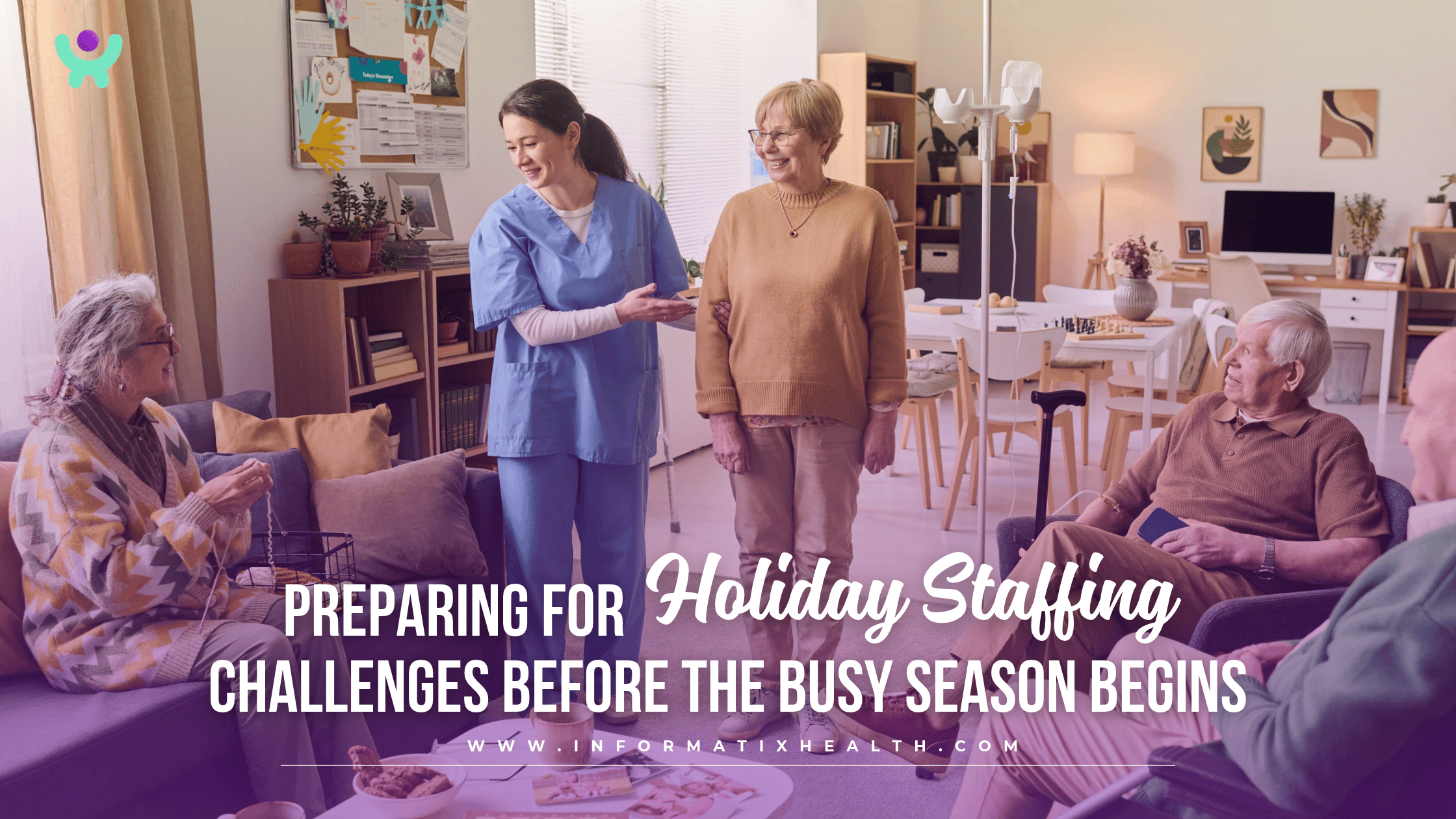
The holiday season brings increased responsibilities for nursing homes and long-term care facilities. While employees look forward to spending time with their families, healthcare facilities must continue providing consistent, high-quality resident care without interruption.
Increased time-off requests, seasonal illnesses, unexpected absences, and limited staff availability can place significant pressure on facility administrators and nursing teams. Without proper preparation, these challenges can contribute to staffing shortages, employee burnout, and disruptions in resident care.
Developing a proactive holiday healthcare staffing strategy before the busy season begins can help facilities maintain operational efficiency, support their workforce, and protect the quality of care residents receive.
Why the Holiday Season Creates Staffing Challenges for Nursing Homes
Unlike many industries, nursing homes and long-term care facilities operate around the clock, including weekends and holidays. Maintaining appropriate staffing coverage remains essential regardless of seasonal demands.
Several factors contribute to holiday staffing shortages in nursing homes, including:
- Increased vacation and paid time-off requests
- Limited availability of nurses and nursing assistants
- Higher rates of seasonal illnesses and unexpected callouts
- Increased overtime and employee fatigue
- Greater competition for available healthcare professionals
- Difficulty filling overnight, weekend, and holiday shifts
- Changing resident care needs
When multiple staffing challenges occur simultaneously, facilities may struggle to maintain adequate coverage. Early healthcare workforce planning can help administrators address these concerns before they become operational problems.
7 Strategies to Prepare for Holiday Staffing Challenges
1. Assess Staffing Needs Before the Holiday Rush
Effective nursing home staffing management begins with understanding anticipated workforce needs.
Facility administrators should review historical staffing patterns, previous holiday callouts, employee availability, resident census, and levels of care to identify potential coverage gaps.
Reviewing staffing data from previous holiday seasons can help facilities determine which shifts, departments, and dates are most likely to require additional support.
Proactive long-term care staffing planning allows administrators to allocate resources more effectively and reduce dependence on last-minute solutions.
2. Establish Holiday Scheduling Plans Early
Creating holiday schedules well in advance gives employees sufficient time to communicate their availability and allows administrators to identify unfilled shifts.
An effective holiday nurse scheduling strategy should include:
- Early submission deadlines for time-off requests
- Fair distribution of holiday shifts
- Advance confirmation of employee availability
- Identification of difficult-to-fill shifts
- Backup coverage for unexpected absences
- Clear communication of scheduling expectations
Transparent scheduling practices can help reduce misunderstandings, improve employee satisfaction, and support consistent staffing coverage.
3. Build a Reliable Pool of Supplemental Healthcare Staff
Relying exclusively on permanent employees during periods of increased demand can place unnecessary pressure on existing nursing teams.
Establishing a dependable pool of supplemental nursing staff provides facilities with greater flexibility when managing planned vacations, unexpected callouts, and temporary workforce shortages.
Partnering with a professional nursing staffing agency can help facilities access qualified healthcare professionals, including:
- Registered Nurses (RNs)
- Licensed Practical Nurses (LPNs)
- Certified Nursing Assistants (CNAs)
Having access to per diem nursing staff before the holiday season begins can help facilities respond more efficiently to changing staffing requirements.
4. Prioritize Employee Well-Being and Prevent Burnout
During the holiday season, permanent healthcare employees may experience increased workloads, additional shifts, and limited opportunities for rest.
Excessive overtime and prolonged staffing shortages can contribute to nurse burnout in long-term care facilities, potentially affecting employee morale, retention, and care quality.
Facility administrators can support their workforce by monitoring overtime, encouraging appropriate rest periods, distributing workloads fairly, and recognizing employees who provide holiday coverage.
Utilizing temporary healthcare staffing solutions can also help relieve pressure on permanent employees without relying solely on overtime to address staffing gaps.
Supporting employee well-being is an important investment in long-term workforce stability.
5. Prepare for Seasonal Illnesses and Unexpected Absences
The holiday season often coincides with increased circulation of respiratory illnesses, including influenza, COVID-19, and respiratory syncytial virus (RSV).
These illnesses can affect both residents and healthcare employees, potentially increasing care demands while reducing staff availability.
An effective healthcare staffing contingency plan should include procedures for managing unexpected absences, identifying replacement personnel, communicating urgent staffing needs, and maintaining appropriate infection prevention practices.
Facilities should also establish clear communication channels with their healthcare staffing partners to help coordinate additional coverage when needed.
Preparing for unexpected circumstances can help minimize disruptions to daily operations and resident care.
6. Maintain Consistency in Resident Care
Frequent staffing changes can disrupt established routines, particularly for residents with Alzheimer’s disease, dementia, or complex care needs.
Maintaining continuity of care in nursing homes requires more than simply filling open shifts. Supplemental healthcare professionals should receive appropriate facility orientation, understand resident care expectations, and follow established policies and procedures.
Whenever possible, facilities should work with familiar agency staff who have previously completed assignments within their organization.
Consistent nursing home staffing coverage can support effective communication, stronger teamwork, resident comfort, and more reliable daily operations.
7. Partner With a Staffing Agency Before Coverage Becomes Urgent
Waiting until staffing shortages become critical may limit access to available healthcare professionals, especially during high-demand holiday periods.
Establishing a relationship with a long-term care staffing agency in advance allows facilities to communicate anticipated needs, discuss scheduling requirements, and coordinate credentialing and orientation expectations.
Early collaboration can also help staffing agencies better understand a facility’s operational needs, preferred qualifications, and anticipated coverage requirements.
A proactive healthcare staffing partnership can provide greater flexibility and preparedness throughout the holiday season and beyond.
Creating a Holiday Staffing Preparedness Timeline
Preparing several weeks before the holiday season can help nursing homes establish a more organized and sustainable staffing approach.
| Recommended Timeline | Staffing Preparation Activities |
|---|---|
| 6–8 weeks before | Review historical staffing shortages, anticipated resident care needs, and employee availability. |
| 4–6 weeks before | Collect time-off requests, identify coverage gaps, and coordinate with staffing partners. |
| 2–4 weeks before | Confirm available supplemental staff and complete necessary credentialing and orientation. |
| 1–2 weeks before | Finalize schedules, confirm assignments, and establish backup coverage procedures. |
| During the holiday season | Monitor staffing levels, manage callouts, and communicate changing coverage needs. |
| After the holiday season | Evaluate staffing performance, overtime expenses, callouts, and areas for improvement. |
Implementing a structured seasonal healthcare staffing plan can help facilities transition from reactive scheduling to proactive workforce management.
The Financial Benefits of Proactive Holiday Staffing
Last-minute staffing shortages can create additional operational expenses, including increased overtime, emergency recruitment costs, and administrative time spent coordinating replacement coverage.
Effective healthcare staffing cost management involves balancing workforce expenses with resident care requirements and operational priorities.
By planning ahead and establishing access to flexible staffing resources, nursing homes may be better positioned to:
- Reduce excessive reliance on overtime
- Minimize last-minute recruitment pressures
- Improve scheduling efficiency
- Support employee retention
- Allocate staffing resources more effectively
- Maintain consistent resident care
Although supplemental staffing involves additional expenses, strategic utilization of flexible nursing staffing solutions can help facilities manage seasonal workforce demands more effectively.
Maintaining Staffing Compliance and Quality Care During the Holidays
Holiday staffing challenges do not reduce a facility’s responsibility to meet applicable staffing regulations, resident care requirements, and professional healthcare standards.
Facility administrators must continue prioritizing nursing home staffing compliance, appropriate staff qualifications, accurate timekeeping, and adequate coverage based on resident acuity and care needs.
When working with external staffing providers, facilities should verify that assigned healthcare professionals meet applicable credentialing, licensing, training, and facility-specific requirements.
A reliable healthcare staffing agency for nursing homes can support workforce flexibility while working collaboratively with facility administrators to address staffing expectations.
Prepare for the Holiday Season With Informatix Health
The holiday season should be a time of celebration, not a period of constant staffing uncertainty. With early preparation, effective scheduling, and dependable staffing partnerships, nursing homes can better manage seasonal workforce challenges while maintaining their commitment to quality resident care.
At Informatix Health, we understand the importance of dependable healthcare professionals in nursing homes, rehabilitation centers, and long-term care facilities.
As a nursing staffing agency in Massachusetts, we help healthcare facilities address workforce challenges through flexible staffing support and access to qualified RNs, LPNs, and CNAs.
Whether your facility anticipates increased holiday time-off requests, temporary staffing shortages, or additional per diem coverage needs, Informatix Health is ready to discuss staffing solutions that align with your operational requirements.
Contact Informatix Health to learn more about our nursing home staffing services in Massachusetts and discuss your facility’s upcoming staffing needs.