

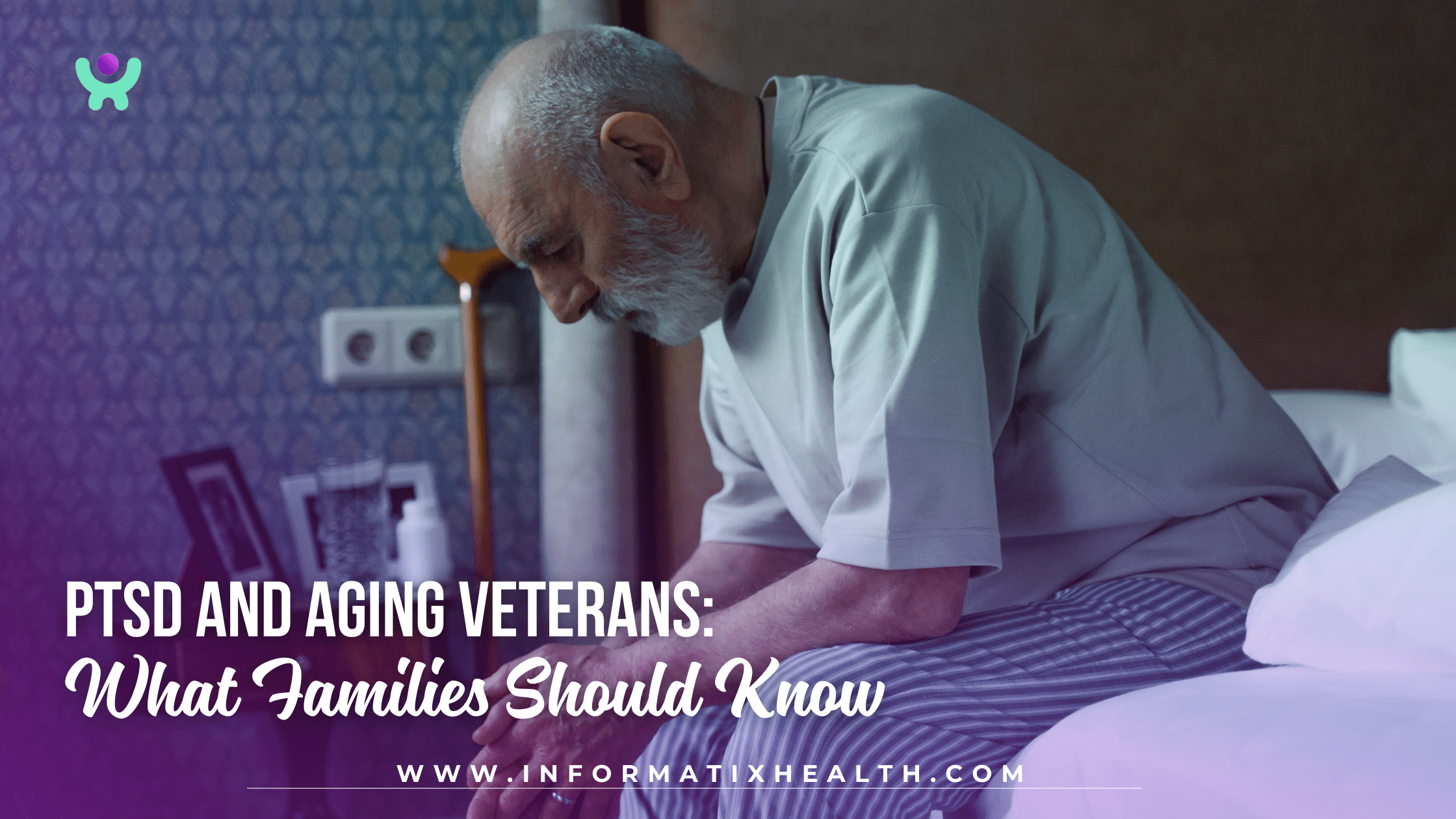
Our nation’s veterans have faced challenges that many people will never fully understand. Their courage, sacrifice, and commitment have shaped the freedoms we enjoy today. As they grow older, however, some veterans continue to carry invisible wounds from their time in service.
One of the most common is Post-Traumatic Stress Disorder (PTSD). While PTSD can affect veterans at any age, its symptoms may change or become more noticeable later in life. Understanding PTSD in aging veterans can help families provide compassionate support while ensuring their loved one receives the care they deserve.
At Informatix Health, we are honored to care for those who have served our country. We believe every veteran deserves understanding, dignity, and personalized care that supports both their physical and emotional well-being.
Understanding PTSD in Aging Veterans
PTSD is a mental health condition that can develop after experiencing or witnessing traumatic events. Many veterans live full and meaningful lives while managing PTSD, but aging can sometimes make symptoms more difficult to cope with.
Retirement, declining physical health, loss of loved ones, or increased time alone may bring back memories or emotions that had been easier to manage earlier in life.
For families, recognizing these changes is an important step in providing meaningful support.
Common Signs of PTSD in Older Veterans
Every veteran experiences PTSD differently, but some common signs include:
- Increased anxiety or nervousness
- Trouble sleeping or frequent nightmares
- Flashbacks or distressing memories
- Avoiding certain places, people, or conversations
- Irritability or sudden mood changes
- Difficulty concentrating
- Social withdrawal or isolation
- Feeling constantly alert or easily startled
These symptoms can sometimes be mistaken for normal aging or other health conditions, making it important to observe changes over time and communicate with healthcare providers.
How Aging Can Affect PTSD
As veterans age, physical health concerns and cognitive changes may increase emotional stress. Chronic pain, hearing loss, mobility limitations, or memory changes can sometimes intensify PTSD symptoms.
Additionally, life transitions such as losing a spouse, moving into retirement, or experiencing reduced independence may trigger emotions connected to past experiences.
Understanding the connection between PTSD and aging allows families to respond with patience, empathy, and compassion rather than frustration or confusion.
How Families Can Provide Support
Supporting a loved one living with PTSD begins with understanding and respect.
Helpful ways families can support aging veterans include:
- Listening without judgment
- Respecting personal boundaries
- Maintaining familiar daily routines
- Encouraging healthy sleep habits
- Promoting social interaction when comfortable
- Attending medical appointments together
- Encouraging professional mental health support when needed
Sometimes, simply being present and offering reassurance can make a meaningful difference.
The Role of In-Home Care for Veterans
For many veterans, remaining in the comfort of home provides a sense of familiarity, security, and independence.
Veteran home care offers personalized assistance while allowing veterans to stay in an environment where they feel most comfortable.
Professional caregivers can assist with:
- Personal care and hygiene
- Meal preparation
- Medication reminders
- Light housekeeping
- Mobility assistance
- Transportation to appointments
- Friendly companionship
- Daily routine support
For veterans living with PTSD, consistent caregivers and familiar routines can help reduce stress while promoting emotional well-being.
Supporting Both Veterans and Their Families
Caring for a veteran with PTSD can be emotionally demanding for family members as well. Caregivers often balance work, family responsibilities, and daily care while trying to provide emotional support.
Having trusted home health care services can ease some of that responsibility, giving families peace of mind knowing their loved one is receiving compassionate, reliable care.
At Informatix Health, we understand that caring for veterans means caring for the whole family.
Honoring Those Who Served
Our veterans have spent their lives serving others. As they age, they deserve care that reflects the same dedication, respect, and compassion they showed throughout their service.
Whether a veteran is living with PTSD, recovering from illness, or simply needs extra support at home, personalized in-home care for veterans can help preserve independence while improving quality of life.
Every act of kindness, every helping hand, and every moment of understanding honors the sacrifices they have made.
Contact Informatix Health Today
If your loved one could benefit from compassionate veteran home care, home health care, or personalized private home care for veterans, Informatix Health is here to help.
Our experienced caregivers are honored to support veterans and their families with respectful, dependable care that promotes comfort, independence, and peace of mind.
Contact Informatix Health today to learn more about our personalized home care services for veterans and discover how we can support your family every step of the way.