

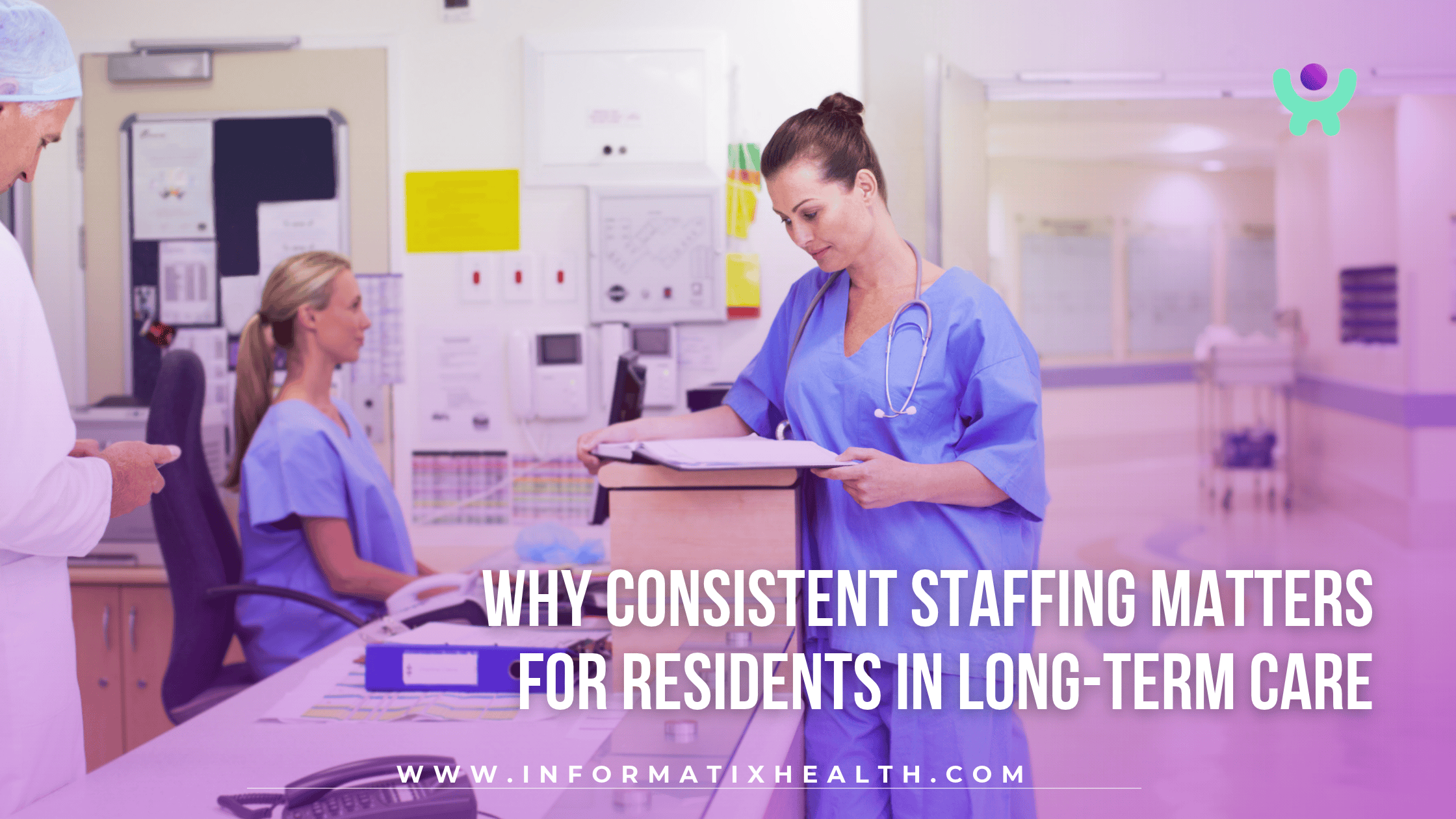
In a long-term care facility, quality resident care depends on more than clinical expertise and established procedures. It also depends on the people who provide that care every day.
For nursing home residents, familiar caregivers can bring a sense of comfort, trust, and stability. For facility administrators and nursing directors, having dependable staff available across shifts helps maintain daily operations, support care plans, and reduce unnecessary disruptions.
However, maintaining consistent staffing in long-term care facilities can be challenging. Unexpected callouts, employee turnover, fluctuating resident needs, and difficulties filling open shifts can place additional pressure on nursing teams.
When staffing becomes unpredictable, the effects can extend beyond scheduling. They may influence continuity of care, staff workload, resident satisfaction, and overall facility performance.
Understanding why consistent staffing matters in nursing homes can help healthcare administrators develop more effective workforce strategies while protecting the quality of care residents receive.
1. Consistent Staffing Supports Continuity of Resident Care
One of the most important benefits of consistent nursing home staffing is improved continuity of care.
Residents in long-term care facilities often require ongoing assistance with medication administration, mobility, personal hygiene, nutrition, and chronic condition management. Many also have individualized care plans that reflect their medical needs, preferences, and daily routines.
When the same caregivers regularly work with residents, they become more familiar with these needs.
For example, an experienced Certified Nursing Assistant (CNA) may recognize that a particular resident prefers assistance with morning routines at a certain time. A Registered Nurse (RN) or Licensed Practical Nurse (LPN) who frequently cares for the same residents may be better positioned to recognize changes in their usual condition.
This familiarity supports continuity of care in nursing homes by helping staff recognize individual needs, communicate observations, and maintain established routines.
Although occasional staffing changes are unavoidable, maintaining a reliable care team can reduce unnecessary disruptions and help residents feel more secure.
2. Familiar Caregivers Help Build Resident Trust and Comfort
For many older adults, moving into a nursing home or long-term care facility is a significant life transition.
Residents may be adjusting to a new environment, changes in independence, unfamiliar routines, or ongoing health challenges.
During this adjustment, relationships with caregivers can become an important source of reassurance.
Consistent caregivers in long-term care have more opportunities to develop trust with residents by learning their preferences, communication styles, and personal needs.
A resident may feel more comfortable receiving personal care from a familiar CNA who understands their routine. Someone living with dementia may also benefit from predictable interactions and recognizable caregivers.
This is particularly important in person-centered care in nursing homes, where services should reflect each resident’s dignity, preferences, and individual circumstances.
Strong caregiver-resident relationships can contribute to a more supportive care environment and may improve resident satisfaction.
For nursing home administrators, maintaining staffing continuity in senior care facilities is therefore not only an operational concern. It is also an important part of the resident experience.
3. Reliable Staffing Helps Protect Resident Safety
Resident safety is a central responsibility of every long-term care facility.
Nursing teams must manage a wide range of daily responsibilities, including medication administration, resident monitoring, assistance with activities of daily living, documentation, and communication with healthcare providers.
When facilities experience frequent staffing shortages, available employees may need to manage heavier workloads or adjust assignments with limited notice.
These conditions can create additional challenges for resident safety in long-term care facilities.
Maintaining adequate nursing staff coverage helps facilities assign responsibilities appropriately, respond to resident needs, and support established safety procedures.
For example, sufficient CNA coverage can help ensure residents receive timely assistance with mobility and personal care. Appropriate RN and LPN staffing supports nursing assessments, medication-related responsibilities, and clinical oversight within each professional’s scope of practice.
Reliable staffing also allows facilities to maintain better coordination during shift transitions.
While staffing consistency alone cannot prevent every adverse event, it is an important component of quality nursing home care and effective resident safety planning.
4. Consistent Staffing Improves Communication Between Care Teams
Effective communication is essential in facilities where residents receive care from multiple healthcare professionals throughout the day.
RNs, LPNs, CNAs, rehabilitation professionals, and other team members must regularly exchange information about resident conditions, care plans, and daily needs.
When staffing assignments change frequently, employees may need additional time to become familiar with residents, documentation systems, and facility-specific procedures.
This can make communication more complicated, especially during busy shifts.
A stable workforce supports nursing team communication in long-term care by allowing employees to develop stronger working relationships and understand established workflows.
Consistent staffing can help improve:
- Shift-to-shift handoff communication
- Familiarity with resident care plans
- Coordination between RNs, LPNs, and CNAs
- Timely reporting of changes in resident conditions
- Understanding of facility procedures and expectations
- Collaboration during unexpected resident care needs
These improvements contribute to effective nursing home workforce management and help reduce avoidable operational confusion.
For facilities that rely on temporary staffing support, assigning qualified agency professionals who can become familiar with facility expectations can further support communication and continuity.
5. Staffing Stability Helps Reduce Employee Burnout
Nursing home staffing challenges affect more than residents. They also influence the working conditions of permanent employees.
When facilities operate with repeated staffing gaps, existing nurses and CNAs may be asked to work additional shifts, cover increased workloads, or adjust schedules on short notice.
Over time, these pressures can contribute to fatigue, stress, and employee dissatisfaction.
Addressing nursing home staff burnout requires a combination of workforce planning, supportive leadership, manageable assignments, and access to appropriate staffing resources.
Maintaining reliable coverage can help distribute responsibilities more effectively and reduce the frequency of last-minute staffing emergencies.
This is especially important for facilities experiencing nursing shortages in long-term care, where recruiting and retaining qualified healthcare professionals can be difficult.
A more stable staffing environment can support employee morale and create better conditions for teamwork.
For nursing home administrators, investing in long-term care staffing solutions is not simply about filling open positions. It is also about supporting the employees who provide care every day.
6. Consistent Staffing Supports Better Resident Care Planning
Long-term care residents often have complex and changing healthcare needs.
Some require assistance with activities of daily living, while others need ongoing nursing supervision, rehabilitation support, or specialized care.
Individualized care plans help guide these services, but successful implementation depends on staff understanding and following each resident’s needs.
With reliable nursing staff in long-term care, facilities can maintain greater consistency in how care plans are carried out across shifts.
Familiar caregivers may be better positioned to identify subtle changes in resident behavior, mobility, appetite, or comfort.
These observations can then be communicated to licensed nursing staff for appropriate evaluation and follow-up.
For residents with dementia or other cognitive conditions, predictable routines and consistent caregiver interactions may also help reduce confusion and distress.
This connection between staffing stability and resident care quality highlights why workforce consistency should be considered part of overall care planning.
7. Unfilled Shifts Can Create Operational Challenges
Even well-managed nursing homes experience unexpected staffing disruptions.
An employee may call out due to illness, request time off, or become unavailable because of an emergency. Facilities may also experience increased staffing needs due to changes in resident census or care acuity.
Without a dependable coverage strategy, these situations can quickly affect daily operations.
Common nursing home staffing challenges include:
- Last-minute RN, LPN, or CNA callouts
- Difficulty filling weekend and overnight shifts
- Increased overtime expenses
- High employee turnover
- Limited availability of qualified nursing professionals
- Unexpected increases in resident care needs
- Scheduling difficulties during holidays and peak vacation periods
Repeated staffing gaps can create additional administrative work and place pressure on existing employees.
Developing a proactive nursing home staffing management strategy can help facilities respond more effectively when these situations arise.
Rather than relying entirely on emergency scheduling adjustments, administrators can establish reliable staffing resources before coverage becomes urgent.
8. Per Diem Staffing Can Help Facilities Maintain Reliable Coverage
Maintaining a consistent workforce doesn’t necessarily mean relying exclusively on permanent employees.
Many nursing homes use a combination of full-time staff, part-time employees, and qualified per diem healthcare professionals to meet changing operational needs.
Per diem nursing staffing for long-term care facilities can provide additional flexibility when facilities need temporary coverage.
For example, a nursing home may require an additional CNA for a weekend shift, an LPN to cover an employee absence, or an RN to support a particular staffing need.
Working with a dependable nursing staffing agency for nursing homes can help facilities access qualified professionals when internal scheduling resources are limited.
However, effective agency staffing should involve more than simply assigning an available employee.
Facilities benefit from staffing partners that understand the importance of professional qualifications, communication, scheduling reliability, and familiarity with long-term care environments.
When possible, requesting returning agency professionals who have previously worked successfully at the facility can also support greater continuity.
The goal of temporary nursing staffing solutions should be to strengthen existing care teams while minimizing disruptions to resident care.
9. A Dependable Staffing Partner Can Support Facility Operations
For nursing home administrators and Directors of Nursing, managing staffing requirements involves balancing resident needs, employee availability, budgets, and applicable regulations.
Partnering with a healthcare staffing agency in Massachusetts can provide an additional resource for addressing workforce shortages and unexpected coverage needs.
An effective staffing partnership should focus on several important areas.
Qualified healthcare professionals: Facilities need RNs, LPNs, and CNAs whose credentials, experience, and qualifications align with assigned responsibilities.
Responsive communication: Clear coordination between facility representatives and staffing agencies helps address scheduling changes and coverage requirements.
Dependable shift coverage: Reliable attendance and timely communication can help reduce last-minute disruptions.
Understanding of long-term care: Healthcare professionals familiar with nursing home workflows may adapt more efficiently to resident care routines and facility expectations.
Flexible staffing arrangements: Access to per diem RN, LPN, and CNA staffing can help facilities respond to temporary vacancies, fluctuating workloads, and scheduling challenges.
A strong staffing relationship should complement a facility’s permanent workforce rather than replace the importance of long-term employee retention.
10. Building a Long-Term Staffing Strategy
A reactive approach to staffing may address immediate shortages, but it doesn’t always resolve recurring workforce challenges.
Facilities that want to improve nursing home staffing consistency should evaluate staffing patterns and identify where additional planning may be beneficial.
Practical strategies include:
- Reviewing recurring staffing gaps by shift and day of the week
- Monitoring employee attendance and turnover trends
- Planning ahead for holidays and scheduled absences
- Maintaining an updated list of qualified staffing resources
- Strengthening onboarding and orientation procedures
- Encouraging communication between scheduling teams and nursing leadership
- Evaluating agency staff performance and reliability
- Requesting returning agency professionals when appropriate
Administrators should also regularly review applicable staffing requirements and adjust workforce plans based on resident census, acuity, and care needs.
In Massachusetts, nursing homes must consider applicable state and federal staffing standards when developing coverage plans.
Tracking measures such as unfilled shifts, overtime usage, staff turnover, and agency coverage reliability can help facilities evaluate their long-term care workforce planning efforts.
A thoughtful staffing strategy supports more predictable operations and helps facilities remain prepared for changing resident needs.
Consistent Staffing Is an Investment in Quality Care
For nursing home residents, consistency can make everyday life feel more familiar, comfortable, and secure.
For healthcare professionals, it creates opportunities for stronger teamwork, clearer communication, and more manageable workloads.
For facility administrators, dependable staffing supports operational stability and helps maintain the quality of care residents and families expect.
Although staffing shortages and scheduling challenges cannot always be avoided, facilities can take proactive steps to reduce their impact.
By strengthening internal workforce planning and establishing dependable staffing partnerships, nursing homes can build more resilient care teams.
Ultimately, consistent staffing in long-term care is about more than ensuring every shift is filled.
It’s about ensuring residents receive attentive, coordinated, and dependable care from professionals who understand the importance of their work.
Partner With Informatix Health for Your Nursing Staffing Needs
At Informatix Health, we understand the staffing challenges nursing homes and long-term care facilities face, from unexpected callouts to ongoing workforce shortages.
As a nursing staffing agency in Massachusetts, we connect healthcare facilities with qualified Registered Nurses (RNs), Licensed Practical Nurses (LPNs), and Certified Nursing Assistants (CNAs) to help support their staffing needs.
Our per diem nursing staffing services are designed to provide flexible staffing support for nursing homes, rehabilitation centers, and other long-term care facilities.
Whether your facility needs assistance covering open shifts, managing temporary staffing gaps, or strengthening its available workforce, we’re here to discuss how we can help.
Looking for a dependable nursing staffing partner?
Contact Informatix Health today to learn more about our RN, LPN, and CNA staffing services in Massachusetts and explore a staffing partnership that supports your facility’s needs.